"You don't need progesterone." Maybe you do.
Oct 01, 2026At 41, it was the wine. One glass on a Friday night, and your chest went blotchy red before you finished it.
At 43, it was leftovers. The chili you've made every winter for twenty years made your lips itch on the second day.
Now you order the plain chicken when you go out, and you tell your friends you're being good. You're not being good. You're afraid of what's in the sauce.
Somewhere along the way, the 3 a.m. wake-ups started. Your heart is pounding and your mind is going through a list, and nothing is actually wrong.
Your doctor ran labs and said, "Everything looks normal." She offered you an estrogen patch. A few weeks later the itching was worse, and you were awake at 3 a.m. more nights than not.
When you asked about progesterone, she said, "You don't need that."
So here's the question nobody has answered for you. Why would a hormone that was supposed to help make you react to more things, not fewer?
Your allergy test can change with your cycle
A group of researchers in Turkey took 42 women with seasonal allergies and gave them skin-prick allergy tests three times in one month: at the start of their cycle, in the middle, and at the end. Same women, same allergens, same needles.
The welts were biggest in the middle of the cycle. That's when estrogen peaks. The women with the most estradiol in their blood that day reacted the most.
Nothing about their allergies changed in those two weeks. Their hormones did.
Estrogen makes mast cells react more easily
Mast cells are immune cells in your skin, your gut, your lungs, and the walls of your blood vessels. They store histamine and release it when they sense a threat. You also get histamine from food, especially wine, aged cheese, and leftovers.
You feel symptoms when the total is more than your body can clear. I think of it as a bucket.
The chili didn't suddenly become a problem. Your bucket was already close to full before you ate it.
Mast cells have receptors for estrogen.
A lab in Galveston, Texas, put mast cells in a dish and added estrogen at the levels found in a woman's blood. The cells started releasing their contents. When the researchers added an allergen too, the reaction was bigger than the allergen caused on its own.
So the estrogen patch didn't cause your reactions. It made mast cells that were already reactive even more reactive.
Progesterone calms mast cells, and in perimenopause it's the first to go
A team at Tufts ran the opposite experiment. They added progesterone to mast cells from rats and then tried to get the cells to release histamine. Progesterone blocked it.
The same researchers pointed out something women with mast cell problems often notice without knowing why. These conditions tend to flare around ovulation, when estrogen peaks, and quiet down in pregnancy, when progesterone is at its highest.
Progesterone also works on GABA, the chemical that calms your nervous system. When GABA drops, you lie in bed with your mind racing even though nothing is wrong.
That's the 3 a.m. list.
In perimenopause, progesterone usually starts falling first, often years before estrogen does. That's the answer to the question at the top.
At 41, your progesterone was already dropping. The patch raised estrogen without replacing progesterone, so the balance tipped even further toward the hormone that makes mast cells react.
Doctors are quick to prescribe estrogen. They don't prescribe progesterone very often, and they almost never check testosterone.
So a woman with histamine problems ends up on the one hormone that makes mast cells more reactive, with nothing to balance it.
Progesterone cream won't help you sleep
A lot of women are handed progesterone cream first. The cream can help with physical symptoms like tender breasts. It helps your breasts while you're still lying awake at 3 a.m.
Oral progesterone goes through your liver before it reaches the rest of your body. Your liver turns a good share of it into allopregnanolone, a compound that works on the same calming system as GABA. That's why oral progesterone makes you sleepy and the cream usually doesn't.
It's also why, for mast cells and sleep, I've found oral progesterone works far better.
The week some women spend in tears
Some women try progesterone and spend the next week crying at things that wouldn't normally touch them. Their doctor says she's never heard of that. They decide hormones aren't for them.
Here's what's usually happening. In some women, GABA is already fairly high. Progesterone pushes it higher, and they feel weepy and flat instead of calm.
That feels like proof progesterone is wrong for you. More often, it means the dose was wrong for you. That's a conversation to take back to your prescriber, with notes.
The other mistakes I see most
Estrogen every day, progesterone 14 days a month. Women on that schedule tend to feel worse on the days they're using estrogen alone. Those who feel best all month tend to use their progesterone all month.
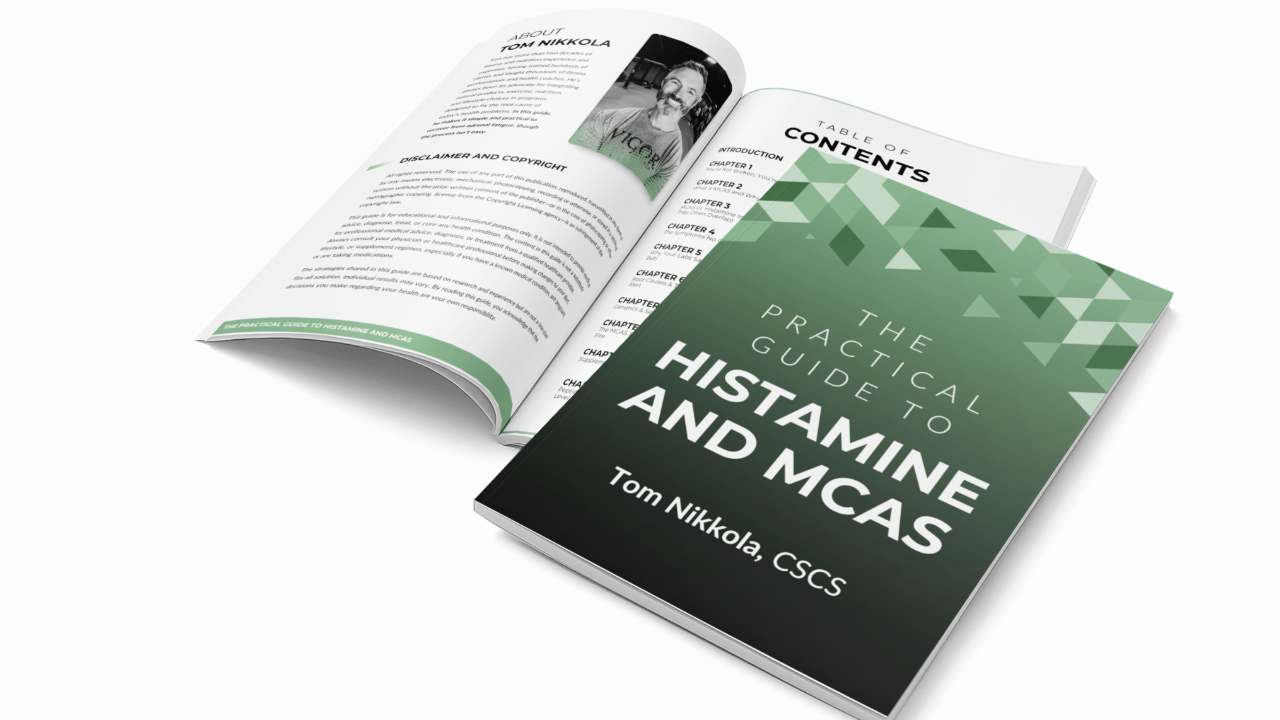
Counting on supplements alone. Quercetin, stinging nettle, and vitamin C can calm mast cells. But when estrogen is high or progesterone is falling, I've found their effect is smaller. On the flip side, when progesterone is optimized, the supplements tend to be more effective, which is why they're part of my MCAS plan.
Trusting "normal." Normal means you're somewhere inside a wide range. It doesn't mean you're where you feel your best. After 40, I'd want estrogen, progesterone, and testosterone checked at least once a year, alongside how you actually feel. I know the testing is inconvenient, but it's worth it. Tests like Rhythm Health make it a lot easier, since you can do the testing at home.
Avoiding hormones because of MTHFR. I work with hundreds of women with MTHFR. For most of them, I think the benefits of balanced hormones outweigh the clotting concern. The more common issue is that they clear estrogen more slowly, and the first fix is a bowel movement every day, because that's how your body gets rid of used estrogen. If you have MTHFR variants, please get and follow my Practical Guide to MTHFR Gene Mutations.
What I've seen in my clients
Most doctors start women on 100 milligrams of oral progesterone at bedtime. Some start at 50.
Among my clients, most end up between 100 and 300, and the average is around 150.
When the dose is right, women notice it about 45 minutes after they take it. They feel relaxed, almost loopy. If you're reading in bed, you probably won't finish the chapter.
If they wake up groggy and still foggy at mid-morning, it's usually more than they need, and they take that back to their prescriber.
When a small dose already makes someone sleepy but her days are still anxious, some of my clients have stayed at that dose and added PharmaGABA during the day. It's a form of GABA your body absorbs much better than the regular kind.
It takes time. I tell women to think of hormone therapy as a one-year commitment. Not to the same dose, but to figuring out which dose is yours.
What the research can and can't tell us
In Vancouver, 189 women in perimenopause took either 300 milligrams of oral progesterone at bedtime or a placebo for three months. The difference in hot flashes was too small to call. But the women on progesterone said they slept better and woke up sweating less often.
The Texas and Tufts studies were done in cells, and the skin-test study was small. Nobody has run a trial of progesterone for MCAS in women.
Every study I've found lines up with what I see in my clients, but most of what I know about this comes directly from working with hundreds of clients one-on-one.
What women tell me once the balance improves
The first thing most women mention is sleep. They lie down, and their mind isn't racing.
Some of them sleep through 3 a.m. for the first time in years. Others say they feel less anxious for no reason.
My clients with MCAS tell me they're reacting to fewer things. When a woman's progesterone is low, I've found that replacing it does as much for reducing flares as any supplement I've recommended. It's not the solution, but it's part of the solution.
For a woman who's been ordering the plain chicken for two years, that's the part that matters.
Where to be careful
Progesterone isn't right for everyone. A personal history of breast cancer or unexplained vaginal bleeding needs a careful conversation with your doctor first. If you're using estrogen and still have your uterus, you need progesterone too, and your prescriber will tell you the same.
If your reactions started in your forties, ask about your hormones before you cut another food.
Where to go from here
If you want someone to look at the whole picture with you, including your labs, your cycle, your reactions, and what you've already tried, book a consultation. I'll help you figure out what to test and what to ask your doctor.
This is education, not medical advice. Talk with your prescriber before you start or change any hormone.