Tirzepatide when you're not losing weight
Sep 29, 2026Maybe you've thought about trying tirzepatide. You brought it up at your last physical, and your doctor said the lowest dose is 2.5 milligrams. Then she looked at your chart and said, "You don't really have weight to lose, though."
Or maybe you went ahead with it. You filled the prescription and took the first shot on a Sunday night. The next day you had barely enough appetite to eat a container of yogurt.
You made it to week three. Then you stopped and told all your friends that tirzepatide didn't work for you.
Or maybe you've never gotten close to it because of what you've heard.
A coworker lost 30 pounds on a GLP-1 and says her face looks ten years older. Your sister sent you a video of a woman who says she couldn't keep food down for a month. Someone in your book club heard it causes thyroid cancer.
Meanwhile, another friend who wasn't trying to lose any weight says her joints stopped aching and she no longer wants a glass of wine every night.
It's hard to know who to believe. After watching more than 200 of my clients use tirzepatide, I can tell you that most of those stories, the good ones and the bad ones, come down to two things: the dose, and how the person ate while they were on it.
What tirzepatide is
Tirzepatide is the medication in Mounjaro and Zepbound.
After you eat, your gut releases two hormones called GLP-1 and GIP. They help your pancreas release insulin when your blood sugar rises, they slow how fast food leaves your stomach, and they signal your brain that you've had enough to eat. Tirzepatide copies both of them, but based on how it was designed, it stays in your system much, much longer. Your naturally produced GLP-1 and GIP last for only minutes, which is why all the "natural GLP-1 boosters" are useless.
That's why it helps with blood sugar and cravings. It's also why a dose that's too big, too fast, can feel like seasickness at your own kitchen table.
Why the "lowest dose" isn't a microdose
Lilly's prescribing information for Zepbound says, "The 2.5 mg dosage is for treatment initiation and is not approved as a maintenance dosage."
In other words, 2.5 milligrams was designed as a warm-up for the weight loss program. In the big trial Lilly ran for weight loss, people started at 2.5 for four weeks and kept climbing. The lowest dose anyone stayed on was 5 milligrams, and the average person in that trial weighed about 230 pounds.
So why does your doctor call 2.5 the microdose? In the US, the pens and vials Lilly makes are single-dose, and the smallest one holds 2.5 milligrams. When she writes a prescription for the brand-name medication, that's the lowest dose she can give you.
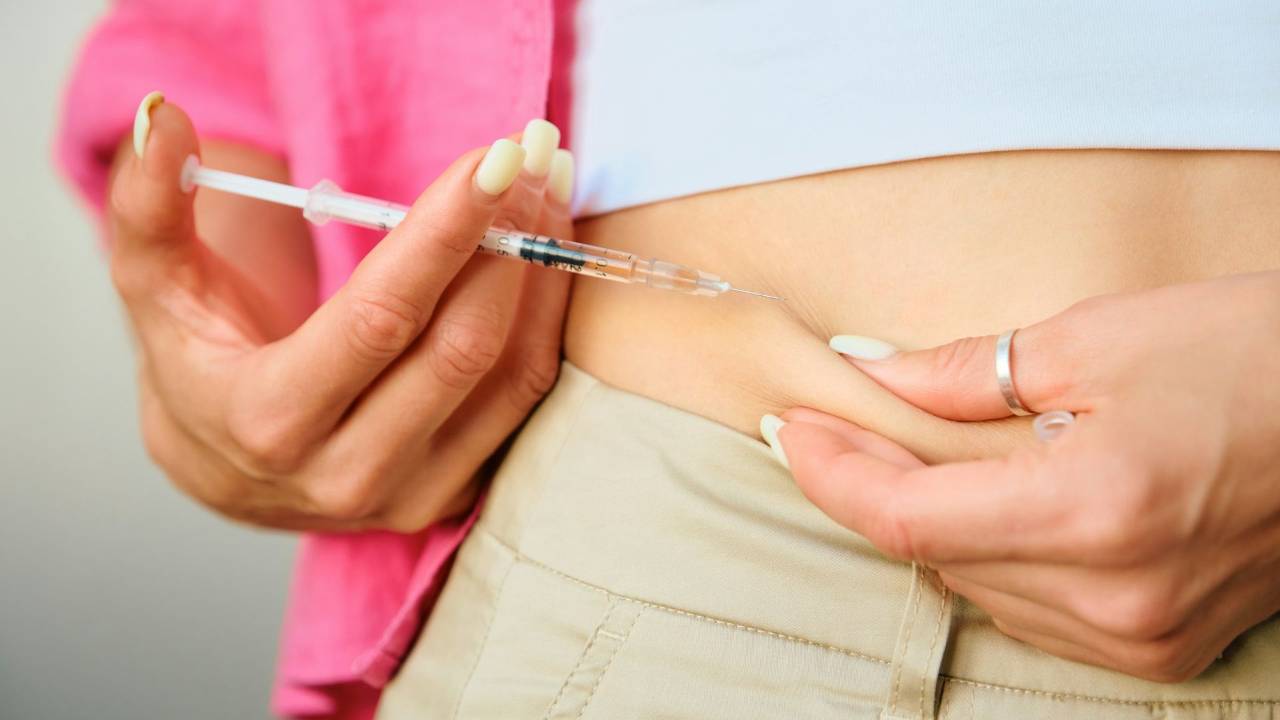
A true microdose is something different. A compounding pharmacy, the kind that mixes medications to order, puts tirzepatide in a multi-dose vial. The dose is drawn up with an insulin syringe, which means it can be a small fraction of 2.5 milligrams.
That's what most of my clients use, and most of them get it through the company I parented with, EllieMD.
The case for using it when you're not trying to lose weight
Among my clients, weight loss is the exception. About 220 of the people I work with use tirzepatide right now, and nine out of ten aren't trying to lose a pound. They use it for inflammation, blood sugar, cravings, and steadier energy.
That's why I use it. My wife does too.
Researchers are starting to explain why so many people feel better on it, even when the scale barely moves.
A group in Argentina pooled the trials that measured inflammation in people taking tirzepatide. C-reactive protein, the most common blood marker of inflammation, fell about a third compared with placebo. Even at 5 milligrams, the lowest dose studied long term, it fell about 20 percent.
A second group went back to stored blood samples from Lilly's weight-loss trial and measured them at the start and again after 72 weeks. At 5 milligrams, C-reactive protein was down 37 percent and insulin resistance was down 26 percent, compared with placebo.
Then there's mast cell activation syndrome, or MCAS. A group of MCAS specialists described 47 patients whose symptoms hadn't improved with the usual treatments. When those patients were given a GLP-1 medication, 89 percent of them showed some benefit.
All that said, nobody has studied doses below 2.5 milligrams in large trials. So the studies give us the direction. What happens at very low doses comes from what I've seen in my clients and others have seen in theirs, and in myself after a year and a half at a low dose.
What my clients tell me that the research hasn't caught up to
I can't put a study behind this part, and it's the part my clients bring up most.
Most of them started for blood sugar or cravings. On our follow-up call, the first thing they mention is usually something else.
Their gut. Women who've had bloating and reflux for years tell me their digestion is calmer than it's been in a long time. That surprises people, because so many people online claim GLP-1s wreck your gut.
Fewer reactions. A lot of my clients with MCAS use it, and many tell me they're reacting to fewer foods and smells than before. GLP-1 receptors are found on mast cells and other immune cells, not only in the pancreas, which may be part of why.
Clearer thinking. Brain fog is one of the most common things people tell me improved, often before anything else did.
The wine and the cravings. The nightly glass of wine stops sounding interesting. A few clients who smoked have told me they cut back without really trying. The word I hear most is "indifferent."
Aches and puffiness. Stiff joints in the morning, swollen fingers, a puffy face. Those are some of the first things people notice changing.
Endometriosis. Women with endometriosis have told me their periods have been less painful since they started. Nobody has studied this in people yet. A group of gynecologists in Brazil published a paper this year explaining why it might happen, and they were careful to call it a hypothesis.
Lipedema. This is the painful fat on the legs, and sometimes the arms, that diet and exercise barely change. This year the Lipedema Foundation surveyed more than 2,700 women with lipedema, and more than half were using a GLP-1, most often tirzepatide. The women using one reported less pain, less swelling, and fewer limits on their day than women who had never used one.
I can't promise any of this for you. I share it because it comes up so often, and because many women never ask their prescriber about tirzepatide at all.
The mistakes that make people feel worse
When someone tells me tirzepatide made them feel terrible, the dose is usually part of it. Just as often, it's what they were eating.
Not enough protein. When your appetite drops, protein is the first thing to go, because chicken and eggs don't sound good when nothing sounds good. I still want 30 grams at every meal. You just have to do it even if you don't feel like it. And, frankly, before tirzepatide, my clients expressed the same sentiments...they didn't want to eat that much protein because it didn't taste as good as eating their calories from carbs and fat. With or without tirzepatide, you need to eat that level of protein or more if you're serious about your long-term health.
Too few carbs. A lot of women on a GLP-1 cut carbs because they assume that's the point. Then they feel shaky, tired, and wired at night. Tirzepatide helps your body use carbohydrates better, so most of my clients end up eating more carbs than they expected, mostly at dinner, and they feel better for it.
No electrolytes. When you eat less, you get less sodium, and plain water doesn't make up for it. Headaches, lightheadedness, and fatigue on a GLP-1 are very often an electrolyte problem. Adding an electrolyte packet to your water each morning takes care of most of it.
Eating too often. This is the one behind most of the gut complaints I hear.
Between meals, a cleaning wave called the migrating motor complex sweeps leftover food out of your small intestine. It only starts after about three hours without food. If you snack every couple of hours, it never gets going. This is one of the biggest reasons people end up with SIBO, which is why I emphasize the need to stop snacking and eat just three meals per day in my Practical Guide to SIBO.
Tirzepatide also slows how fast food leaves your stomach. Put the two together and food sits where it shouldn't, which is how you end up bloated, gassy, and sure the medication wrecked your gut. When my clients switch to three meals and no snacks, a lot of that goes away.
I'd estimate three out of four people also start tirzepatide with low stomach acid, low bile, or low enzymes.
When your stomach isn't breaking food down well, a fatty meal makes you queasy and your protein sits there like a brick. Taking a digestive formula with acid, bile, and enzymes at meals helps.
Three myths worth clearing up
"It slows down your whole gut." It slows gastric emptying, which is how fast food leaves your stomach. It doesn't slow motility, or how food moves through your intestines.
A team at Lilly measured this by giving people acetaminophen and timing how long it took to reach their blood. After the first dose it took longer, and after several weekly doses the delay shrank.
"It melts your muscle and ages your face." Losing weight fast without enough protein and without lifting takes muscle with it, on a GLP-1 or off one. That's what your coworker saw in the mirror. At the doses my clients use, most aren't losing much weight at all, and the ones who eat their protein and lift two or three days a week keep their muscle.
"It causes thyroid cancer." The warning on the label comes from studies in rats and mice given large doses. Rodents have far more GLP-1 receptors in their thyroid than people do, and based on all the human research there's no evidence of this in humans.
Still, if you or a close relative has had medullary thyroid cancer or a rare condition called MEN2, tirzepatide isn't for you. The label is clear on that, and so am I.
What I've seen work in my clients
I'm not your prescriber, and your dose is a decision for you and your prescriber. What I can share is the pattern I've watched across a couple hundred people.
Most of my clients start far below 2.5 milligrams, usually around 0.25 to 0.5 milligrams a week. That's about a tenth to a fifth of the standard starting dose. For the first few weeks they usually don't feel much, and that's expected.
They typically stay at a dose for two to three weeks before going up by a quarter milligram. Once they notice a difference, they stop going up and stay there. Some of my clients stay at a very low dose for months, and others end up needing four or five milligrams.
There's research behind going slowly. Researchers in Germany, the US, and Korea compared early trials of these medications, where people got a dose with little or no ramp, with later trials where people went up slowly. For semaglutide and tirzepatide, the people who went up slowly could handle two to five times more medication before nausea became a problem.
When my clients start this low and go up this slowly, side effects are rare. The most common complaint I hear is a little redness where the needle went in.
So how do they know it's working? It's quieter than most people expect.
For some it's the mirror. One morning their face looks a little different. They don't look thinner, just like they're holding less water.
For others it's the break room. Someone brings in birthday cake, they walk past it, and they don't have the usual argument with themselves. They just don't want it.
It's an odd thing to be excited about, a piece of cake you didn't eat. That's often what it looks like.
For some it's 3 p.m. with no brain fog.
And will you have to be on it forever? You can be. I don't plan to stop.
A few real risks
Pancreatitis and gallbladder problems are rare and are dose dependent, and severe belly pain means you call your provider that day.
Tirzepatide isn't for pregnancy. Nausea and constipation are common, and they're dose-related, which is why the slow start matters.
Most people end up on more medication than they need. The women I've seen do best started lower than they thought they should, ate more than they wanted to, and gave it time.
Where to go from here
To get started, most of my clients U.S. clients use EllieMD. Their doctors review a short online questionnaire and send the prescription to a compounding pharmacy that ships it to you. The prescription will be written for 2.5 milligrams, because that's the lowest approved dose, so ask about starting lower and going up slowly.
Learn about microdosed tirzepatide at EllieMD.
If you want a plan built around you, including your labs, your hormones, what you've already tried, and whether tirzepatide belongs in your first step at all, book a consultation.
This is education, not medical advice. Talk with your prescriber before you start or change any medication.