The tirzepatide dose that quiets perimenopause
May 19, 2026You've watched a friend lose 40 pounds on tirzepatide. You've also watched her spend the first two months nauseated, exhausted, and afraid to leave the house.
So when your own doctor mentions it, you stall. Perimenopause already has you handling hot flashes at 2 a.m., a waistline that doesn't respond to anything, and a mood that turns on you without warning.
Adding more chaos isn't appealing. Here's what almost nobody tells you. The standard tirzepatide dose was never designed for your body.
The Dosing Problem
The original titration schedule starts at 2.5 mg, climbs to 5, then 7.5, and tops out at 10 or 15. It was built around trial populations dominated by larger, less hormonally fluctuating bodies.
It works for that population. It often doesn't work for yours.
The data is clear. Women report GLP-1 nausea at roughly 2.5 times the rate of men, and discontinuation rates among women are about 16 percent higher.
Most of that isn't a tolerance issue. It's a dose-mismatch issue layered onto a fluctuating hormonal background.
If you've already tried tirzepatide and quit because the side effects felt like a flu that wouldn't end, you weren't doing it wrong. You were doing it at a dose that wasn't built for you.
What Microdosing Actually Means
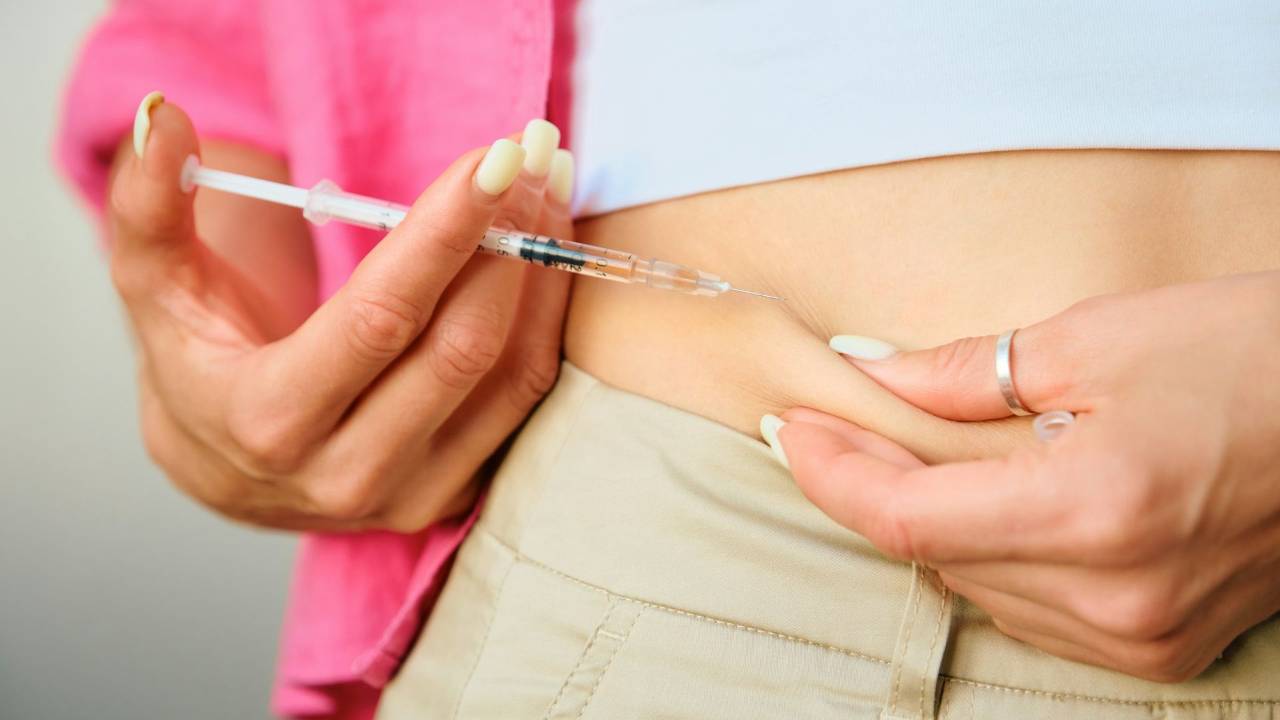
Microdosing tirzepatide isn't a trendy half-step. It's a sustained low-dose strategy, usually in the 1 to 2.5 mg range, held there long term instead of escalated.
The goal shifts. Instead of aggressive appetite suppression, you get steady GLP-1 and GIP signaling.
Insulin sensitivity improves. Hunger noise quiets. Inflammation drops.
The nausea, fatigue, and gut slowdown that come with higher doses largely stay off the table. Most women I work with feel the metabolic and mood benefits between 1 and 2 mg. Pushing past that often trades the benefit for side effects, which defeats the purpose.
The Hormonal Stabilization Layer
This is where the conversation shifts beyond weight loss.
Perimenopause is, at its core, a metabolic and inflammatory event. Estrogen no longer reliably buffers insulin signaling, and progesterone drops, which pulls GABA tone down with it.
Cortisol spikes more easily. Mast cells get touchier. Brain fog and energy crashes follow the same pattern as your glucose curve.
A microdose of tirzepatide intervenes upstream of most of that. Steady GLP-1 and GIP signaling smooth out post-meal glucose spikes.
That alone reduces hot flashes for many women, because vasomotor symptoms track tightly with glycemic variability. Inflammatory tone drops, which softens joint pain and the morning stiffness that started showing up around 42.
Insulin sensitivity recovers. That's the difference between gaining weight on 1,800 calories and finally not.
The mood piece surprises people. GLP-1 receptors live in the brain, not just the gut. Recent studies have noted reductions in anxiety and depressive symptoms on low-dose GLP-1 therapy, independent of weight change.
Why Luteal-Phase Timing Matters
Here's a detail most prescribers skip.
Nausea on tirzepatide climbs in the luteal phase, the two weeks before your period. Progesterone slows gastric motility on its own.
Add tirzepatide on top, and a dose you tolerated at week one of your cycle can feel intolerable at week three.
If you're titrating up, do it during the follicular phase. That's roughly day 3 to day 12 of your cycle.
Your stomach empties faster, hormonal load is lower, and the body absorbs the change with much less resistance.
If you've already noticed your worst tirzepatide days cluster in the week before your period, that isn't coincidence. It's pharmacology meeting cycle physiology, and timing your dose changes around it solves a problem most women don't know they have.
The Pairing Layer
A microdose of tirzepatide on its own is good. Paired correctly, it changes the entire arc of perimenopause.
Three pieces matter:
- A protein floor. At least 0.8 to 1.0 grams per pound of goal body weight, spread across three meals, four to six hours apart. Tirzepatide quiets appetite. Without a protein floor, you'll lose muscle along with fat, and lean mass loss in your 40s is what determines your next 30 years.
- Sermorelin. A growth hormone secretagogue that supports sleep depth, recovery, and lean tissue preservation. While tirzepatide handles glucose and appetite signaling, sermorelin supports the repair side of the equation. The combination is why many women feel like themselves again, not just smaller.
- A nervous system reset. Cortisol management, sleep, and morning light exposure. Tirzepatide doesn't fix a frayed nervous system. It can quiet enough noise that you finally have the bandwidth to address it.
The stack matters more than any single piece. I've covered the body composition side of this combination in more depth here: Why Tirzepatide, Sermorelin, and MOTS-c Is the Most Powerful Body Composition Stack I've Seen.
When Microdosing Isn't the Answer
This isn't every woman's answer.
If you have active PCOS with severe insulin resistance, may not be enough to move the needle, but it can still be a great place to start. A higher therapeutic dose, paired with metformin or inositol and a more aggressive insulin protocol, fits better. More on that in PCOS and Tirzepatide: Deeper Than Weight Loss.
If you're managing clinical obesity and your primary goal is significant weight reduction, a full therapeutic dose, titrated carefully, may be the right tool. Microdosing is a stabilizer, not a weight-loss accelerator.
If you have mast cell activation syndrome or histamine intolerance, the picture changes again. The interaction is covered here: Tirzepatide and MCAS, What Nobody Explains.
What to Do Next
If you've been told tirzepatide isn't for you because the side effects were too much, that conversation isn't over.
The dose was wrong. The timing was probably wrong. The pairing was missing.
A consultation is the cleanest way to map this out for your specific labs, cycle, and goals. We look at insulin, fasting glucose, ferritin, thyroid, sex hormones, and methylation status, then decide whether microdosed tirzepatide fits your protocol and at what dose. And even more importantly, how it fits with an ideal nutrition, lifestyle, exercise, and supplement plan.
If you'd rather start with self-education, my wife put together a Microdose Handbook for women navigating this exact decision. It walks through what to expect, how to read your own response, and the questions worth asking your prescriber. It's free.
Download the Microdose Handbook.
If you've already done the workup and you're ready to start, and you live in the U.S., you can get started through the same telehealth company my clients and I use, so it's always prescribed by a medical professional.
Get started with microdosed tirzepatide.
The dose that helps you isn't the dose that helped your friend. It's the one calibrated to your hormones, your cycle, and the next ten years of how you want to feel.