PCOS and tirzepatide: deeper than weight loss
Apr 16, 2026You've probably heard about GLP-1 medications for weight loss. But if you have PCOS, the results go much deeper than the number on the scale.
Use of GLP-1 medications in women with PCOS jumped from 2.4% to 17.6% between 2021 and 2025. That's a 637% increase in four years. Women are clearly finding their way to these medications. But the mainstream conversation is almost entirely about weight.
The more important story is about insulin, androgens, and a hormonal cascade that most women with PCOS have never had explained to them clearly.
Understanding why tirzepatide works differently for PCOS requires understanding what is actually happening inside your body. Most of the conversation skips that part entirely.
Insulin Resistance Is Not a Side Effect of PCOS
Most explanations of PCOS start with the symptoms: irregular periods, elevated testosterone, acne, hair thinning, weight that won't budge no matter what you do. That's the what. The why is almost never covered clearly.
The majority of women with PCOS have insulin resistance as a core underlying driver. Not a secondary symptom, not an unrelated complication. It's the mechanism behind most of what's going wrong.
When your cells stop responding to insulin efficiently, your body produces more of it to compensate. Chronically elevated insulin operates quietly in the background, driving a hormonal chain reaction that most clinicians never fully connect to PCOS symptoms.
This is also why lifestyle changes that don't specifically address insulin sensitivity often produce limited results. You can eat less and exercise more, and still be running against the same upstream problem.
How High Insulin Drives Androgen Overproduction
Here's the part most women with PCOS never hear: high insulin tells your ovaries to produce more testosterone.
Your ovaries have insulin receptors. When those receptors are exposed to chronically elevated insulin, they respond by ramping up androgen production.
More testosterone disrupts ovulation. Disrupted ovulation leads to irregular or absent cycles. And the loop continues.
At the same time, elevated insulin suppresses a protein called sex hormone-binding globulin, or SHBG.
SHBG normally binds testosterone and keeps it in an inactive form. When SHBG drops, more free testosterone circulates in your blood, and that's the testosterone causing symptoms.
When ovulation doesn't happen consistently, a second problem emerges. Progesterone is only produced after ovulation. No ovulation means no progesterone.
Low progesterone relative to estrogen contributes to mood disruption, poor sleep, and breast tenderness alongside the androgen-driven symptoms. It's the same root cause, branching in two directions.
So the acne, the hair loss, the irregular cycles, the mood swings. They're not separate problems. They're all downstream of the same cascade that starts with insulin resistance.
Why Tirzepatide's Dual Action Matters Specifically for PCOS
Metformin has been the standard treatment for PCOS-related insulin resistance for decades. It works by reducing glucose production in the liver. It helps. But it addresses one piece of the puzzle.
GLP-1 receptor agonists like semaglutide were the next evolution. They improve insulin sensitivity, slow digestion, and reduce appetite. Meaningful results, but still a single mechanism.
Tirzepatide is different. It acts on both the GLP-1 and GIP receptors simultaneously. GIP is the other incretin hormone, and it plays a complementary role in insulin sensitivity, particularly in fat tissue.
Hitting both receptors produces a significantly more potent reduction in insulin than either mechanism alone.
Think of it this way. Metformin works on one lever. Semaglutide works on another. Tirzepatide works on both at the same time. For a condition driven by a multi-layered insulin problem, that additional coverage is meaningful.
For PCOS specifically, this dual action matters because you're not just nudging insulin down. You're addressing the central driver of androgen overproduction from two angles at once, which is exactly what the condition requires.
What Real-World Data Actually Shows
Real-world data from tirzepatide use in PCOS populations tells a story that goes well beyond weight loss. Emerging observational and clinical data consistently show outcomes that would not be expected from weight reduction alone.
Women with PCOS using tirzepatide show:
- Average weight loss exceeding 20% of body weight in real-world PCOS populations
- Menstrual cycle regulation in women who previously had irregular or absent cycles
- Measurable reductions in free and total testosterone levels
- Improvements in SHBG, meaning less free testosterone driving symptoms
- Reports of hair regrowth in women who had experienced androgen-related thinning
Weight loss with any method can improve PCOS symptoms, because reducing fat mass lowers peripheral insulin resistance.
But tirzepatide's hormonal impact appears to go beyond what weight loss alone explains.
Some women are seeing cycle regulation and testosterone changes at relatively early timepoints, before significant weight loss has occurred. That pattern points to the mechanism doing direct work on insulin sensitivity, not just a downstream effect of weighing less.
Tirzepatide is not a cure for insulin resistance, and it doesn't change the fundamentals. High protein intake and consistent resistance training still matter significantly when using these medications, both for protecting muscle and for sustaining outcomes.
What This Means If You're Considering GLP-1 Therapy
This isn't a universally perfect medication, and the right fit depends on your full nutrition, exercise, and lifestyle plan. But a few things are worth knowing before you start.
- Muscle loss is a real risk with ANY rapid weight loss, it's not due to GLP-1 medications. High protein intake and consistent resistance training are not optional if protecting body composition matters to you.
- Some women with PCOS also have MCAS or histamine intolerance. GLP-1 receptors are expressed on mast cells, and when activated, they appear to reduce mast cell degranulation. For women managing both PCOS and mast cell reactivity, that's an additional reason to look closely at this class of medication.
- The goal is to address insulin resistance, not just change the number on the scale. Tracking fasting insulin, free testosterone, SHBG, and HbA1c before and during treatment gives you a real picture of what's actually improving.
If you've spent years being told to lose weight without anyone connecting your symptoms to a specific mechanism, that conversation is worth having. There's a reason things aren't resolving with effort alone, and insulin resistance is very often that reason.
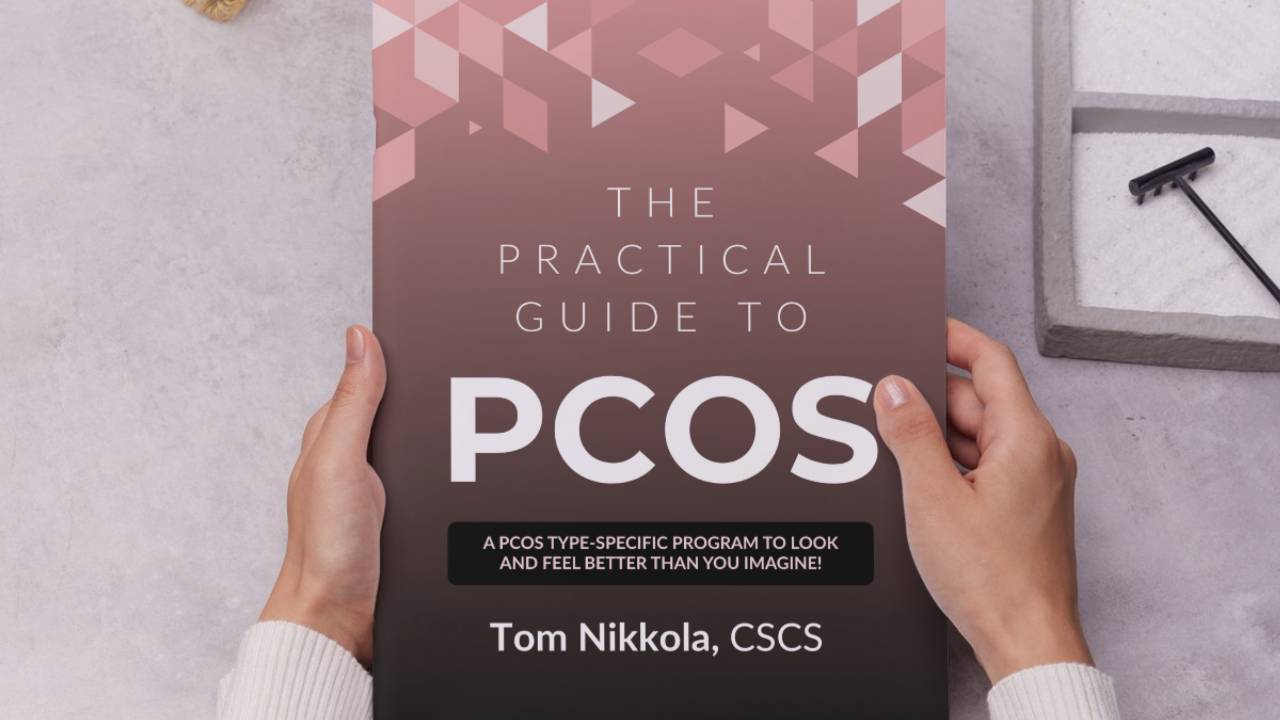
Not all types of PCOS demand the same protocols or solutions, so if you need a starting point, I'd recommend my Practical Guide to PCOS.
Tap here and get my Practical Guide to PCOS for $20 off!
If you're exploring tirzepatide for PCOS, the telehealth company I refer clients to offers it at microdose or weight loss doses.