Can't Stay Asleep? A Sleep Stack That Isn't Melatonin
Oct 06, 2026You keep a dry T-shirt folded on your nightstand now. You can change into it in the dark without turning on a light.
You do everything you're supposed to do. The room is dark, your phone charges in the kitchen, you're in bed by ten, and you take your magnesium.
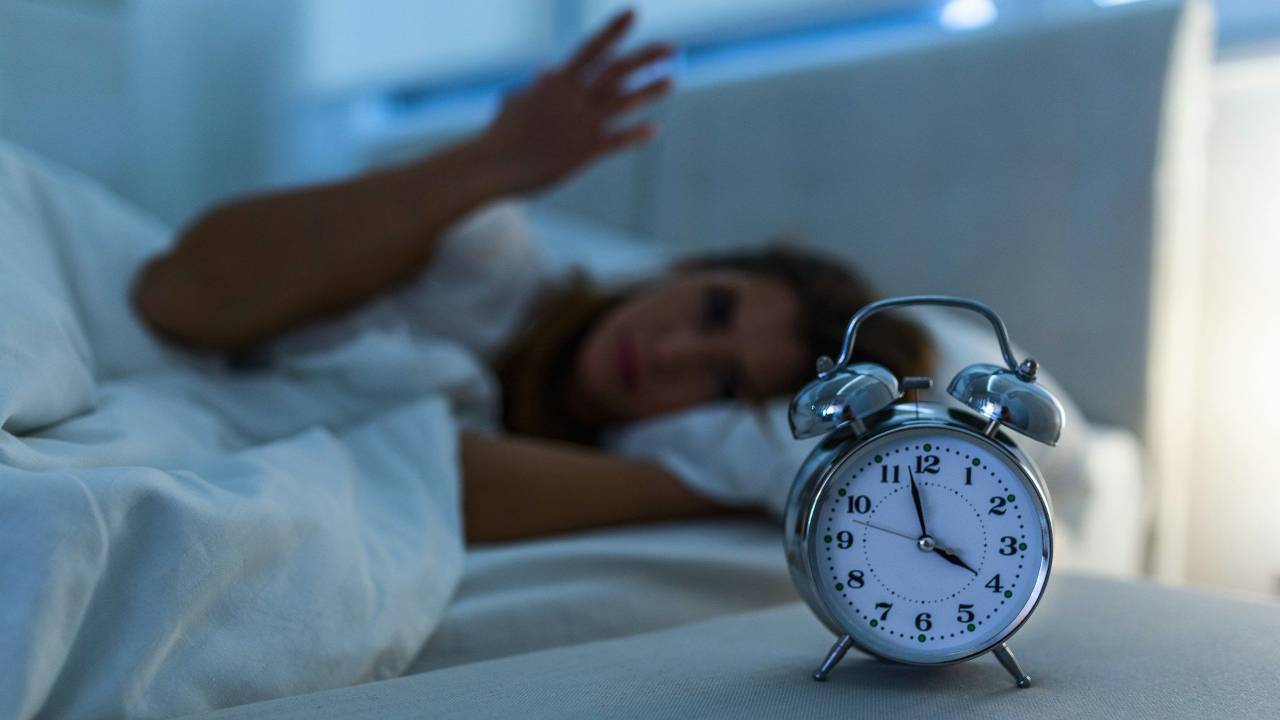
And at 3:07 you're awake. You're hot, your heart is going, and you have to pee. Again.
You check the time. Then you lie there writing tomorrow's to-do list in your head: the 8:30 meeting, the permission slip, the email you meant to send at four.
In the morning, your watch says you got 38 minutes of deep sleep. You look at that number while the coffee brews and decide not to think about it until tonight.
When you brought this up at your physical, your doctor asked, "Have you tried melatonin?"
You had. The bottle is in the kitchen drawer with the ashwagandha and the adrenal blend. It put you out at eleven, left you foggy until ten, and you still woke up at three.
So here's the question you're left with. If you're doing everything right, why are you still awake at 3 a.m.?
Deep sleep is when your brain gets rinsed
You cycle through light sleep, deep sleep, and REM sleep several times a night. REM gets most of the attention because that's when you dream.
Deep sleep matters just as much. It's when most of your growth hormone is released, and when something stranger happens inside your head.
A group of researchers in Boston had 13 people fall asleep inside an MRI scanner while wearing caps that recorded their brain waves. If you've ever had an MRI, you know how loud they are. These people slept anyway.
Once their brain waves slowed into deep sleep, the scans showed big waves of cerebrospinal fluid, the clear fluid that surrounds your brain, washing in about every 20 seconds. While they were awake, that fluid barely moved.
What I look for in clients is about an hour to an hour and 20 minutes of deep sleep and an hour to an hour and 10 minutes of REM. Even 10 or 20 more minutes of deep sleep can change how you feel the next day.
Melatonin tells your body what time it is
Melatonin isn't a sedative. Your body makes it when it gets dark, and it tells your brain that night has started.
That helps when the problem is timing, like jet lag. It does much less for someone who lies in bed with their mind racing, or who falls asleep fine and wakes up hot three hours later, and a lot of people wake up foggy on it.
So it isn't where I start.
Glycine helps your body let heat out
Ajinomoto, the Japanese company best known for MSG, has spent years studying glycine, an amino acid your body uses to make collagen.
In one set of experiments, they gave rats glycine and then measured blood flow to the bottoms of their feet. Blood flow went up, heat left through the feet, and the rats' core temperature dropped. They fell into deep sleep faster.
When the researchers removed the tiny cluster of brain cells that keeps the body's clock, glycine did nothing.
That's the answer to the question at the top, at least for a lot of the women I work with. Your body has to let heat out to stay in deep sleep. For many women, especially in perimenopause, the body heats up in the middle of the night, and they come out of deep sleep because they're too warm.
Sometimes low blood sugar or histamine is part of it too. But a lot of the time, your body simply got too warm. The pounding heart and the racing list in your head often show up after you're already awake.
That explains the heat. It doesn't explain why this started when it did.
For most women I work with, the 3 a.m. wake-ups showed up the same year as everything else: the second wind at 10 p.m., and the coffee that started making you shaky instead of awake.
And the 6 a.m. class you loved, which now costs you all of Wednesday.
That's a cortisol pattern. I'll come back to it, because it matters more for your sleep than anything else in this email.
Glycine, and why your magnesium doesn't count
Magnesium glycinate has a little glycine bound to it, but nowhere near enough to do what glycine does on its own. The amount that helps is 3 to 9 grams.
Glycine is a powder, and it tastes like table sugar because of the way it hits your sweet receptors. It's the only sleep supplement I know of that you could stir into your tea by mistake. Most of my clients take it the way they take creatine: a scoop in the mouth, then a sip of water.
To find their amount, I have clients take 3 grams at bedtime for a week, then 6 the next week, then 9. They notice which week was best and stay there. It doesn't make you drowsy, and I haven't seen side effects from it.
I'm careful about expectations here. If you wake up soaked enough to change your shirt, glycine won't make that disappear. It can take the edge off.
The bathroom trip three hours in
The other thing that wakes peole up is the bladder. It doesn't matter if they go to bed at ten or at midnight, three hours later they're up to pee.
A handful of my clients have started sleeping later into the night with one change: a small glass of heavily salted water right before bed. Eight ounces, no more, with a concentrated electrolyte like LMNT or a good pinch of salt. Not like you're drinking out of the ocean, but more than a dash.
This is about sodium, not the magnesium or potassium. Enough sodium helps your body hold on to water, so you don't have to get up to get rid of it.
This one comes with a real caveat. A group of urologists in Japan worked with 321 people who ate a lot of salt and got up at night to pee. The ones who cut back went from a little over two trips a night to about one and a half.
So salt water at bedtime is for a specific people. They eat clean, drink water all day, and rarely salt anything. If you eat out most nights or keep a bag of chips in the pantry, more salt probably isn't your fix.
Why the new magnesium stopped working
Another one I hear a lot: a new magnesium worked beautifully for a week, and then it stopped working.
Sometimes the dose was never right. I have clients start around 300 milligrams, then go to 400 the next week, then 500, and watch whether each step helps. If more keeps helping, that's a good sign low magnesium was part of the problem.
Once clients find the amount that helps, I suggest five days on and two days off, so their body doesn't get used to it. I can't point you to a study for that one. It's the same rhythm I use with peptides, and it's worked well in my clients.
If you can't get back to sleep
GABA is the chemical that calms your nervous system. Most GABA supplements aren't absorbed well. PharmaGABA, a patented form that Designs for Health and Natural Factors use, is absorbed much better.
It tends to help people fall asleep faster, and fall back asleep if they wake up. Most of my clients start at 250 milligrams.
In Korea, researchers gave 40 people with insomnia GABA from fermented rice germ or a placebo for four weeks and checked their sleep in a lab. On GABA, the time it took to fall asleep dropped from about 13 minutes to under 6. It was small, and it wasn't the PharmaGABA brand, so I treat it as a good lead.
Sermorelin, when deep sleep stays low
Sermorelin is a prescription peptide. It copies GHRH, the hormone that tells your pituitary gland to release growth hormone, which happens mostly during deep sleep.
Researchers in Munich found that when young men got GHRH through an IV in the first half of the night, their deep sleep increased. When they gave the same hormone between 4 and 7 a.m., deep sleep didn't change at all.
What I can share is what I've seen.
When I use sermorelin, I get great deep sleep. I use it five days on and two days off, so on weekends I expect to sleep a little less deeply than I do during the week.
Most of my clients notice the deep sleep at about 10 units, which is 300 micrograms at the usual dose. A few women feel their heart race after a full dose at bedtime. Some of them have done better splitting it, half in the morning and half at night, which keeps them under the amount that sets it off.
Where I start almost everyone
Two things, and you can do the first one tonight.
Carbs at dinner. A lot of peole who wake at 3 eat a clean, low-carb dinner, and that makes the wake-up more likely. A serving of jasmine rice, a sweet potato, or squash at dinner helps your cortisol come down so you sleep deeper.
Glycine at bedtime, starting at 3 grams.
Then one change a week, never four at once, and give each one the full week. Change four things on the same night and you can't tell which one helped, or which one kept you up.
What comes next depends on your stage
Here's the cortisol pattern I said I'd come back to. When stress goes on long enough, your cortisol rhythm changes in three stages, and each one sleeps differently.
Wired but functional. Cortisol runs high. You get a lot done, and it takes you longer to fall asleep.
Wired and tired. Your morning cortisol drops and your evening cortisol stays up. You're dragging at 3 p.m., wide awake at 10 p.m., and up again between 2 and 4 a.m. This is the stage I see most.
Flatlined. Cortisol is low all day. You sleep eight or nine hours and wake up like you didn't sleep at all.
Most women see themselves in two of those. And here's the part that trips them up: the right moves point in opposite directions depending on the stage.
In the first stage, a cup of coffee before 10 and lifting three or four days a week are usually fine. In the third, that same coffee and those same workouts can keep you waking at 3, and walking is where you start. The supplements for your evenings are different in each stage too.
So you can do everything right for the wrong stage and still be awake at 3:07.
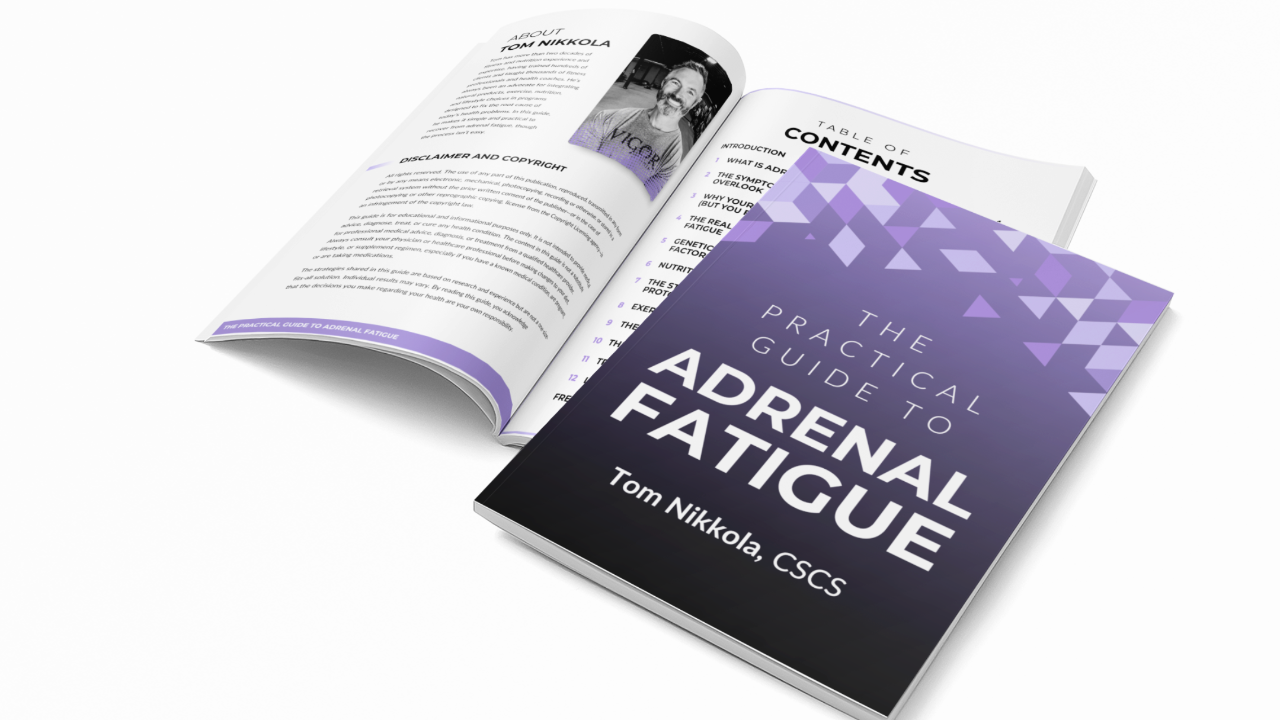
I put a short quiz in my Practical Guide to Adrenal Fatigue that tells you which stage you're in. The guide also has the supplements and doses for each stage and the 30-day plan, in order.
What women tell me once it's working
They make it past the three-hour mark, some of them all the way to the alarm.
The deep sleep number on the watch goes up by 15 or 20 minutes, and they notice it by mid-morning, before they ever check the app.
And the T-shirt on the nightstand stays folded.
I can't promise any of that for you. I share it because most women only ever hear about melatonin.
And if your husband is up at 3 too, send him this. Everything here works the same way for men, and sermorelin is what I use myself.
Where to be careful
If you snore, wake up with headaches, or get up to pee more than once a night, ask your doctor about a sleep study. Sleep apnea causes all three, and no supplement fixes it.
Skip the salt water if you have high blood pressure, kidney disease, or heart problems. If you take anything for sleep, mood, or blood pressure, check with your prescriber before you add any of this. Sermorelin isn't for pregnancy or anyone with active cancer.
You already fixed the room. What's left is finding your stage.
Where to go from here
Start with your stage. The Practical Guide to Adrenal Fatigue has the quiz that tells you which stage you're in, the supplements and doses for each stage, and the 30-day plan. This link includes a reader discount.
If you want the sleep tools in one place, I've put glycine, PharmaGABA, magnesium glycinate, and a concentrated electrolyte together as my sleep protocol in Fullscript, the supplement dispensary I use with clients. Get the sleep protocol on Fullscript. I earn a commission on orders through my Fullscript store.
If your deep sleep is still low after a month, sermorelin may be worth a conversation with a prescriber. Most of my clients get it through EllieMD. I'm an EllieMD affiliate, so I earn a commission if you order through my link.
If you're on a sleep medication you'd like to come off, your drawer holds more than eight bottles, or you have hormone questions, that's more than a guide or a stack should handle on its own. Book a consultation and we'll put it in order together.