Why 3 p.m. hits so hard
Oct 13, 2026It's 2:50, and you're reading the same email for the third time. The words are all there. None of them are going in.
There's a coffee next to the keyboard that you didn't really want. You made it anyway, the way you'd feed a parking meter.
You were in bed by 11 and up at 7. When you mention being tired, somebody at home says, "You slept eight hours, though."
You did. So why does 3 p.m. feel like this?
Hold that question for a minute. Most people hit a different wall first, and it has a different cause.
Two walls that feel the same
When I ask clients when their energy drops, a lot of them describe two dips, not one.
The first shows up around 11 or 11:30. The second comes somewhere between 2 and 4.
From the inside they feel identical. Heavy eyes, a slow brain, and a strong opinion about the couch. So most people treat them the same way, with coffee, a snack, or whatever showed up in the break room.
But they don't share a cause, so one fix rarely handles both.
The 11 a.m. wall: breakfast came too late
Here's a morning I hear about almost every week.
She's up at 7. She has coffee, answers messages, gets everyone out the door.
Breakfast happens around 9:30, and it's a good one, eggs or cottage cheese with berries. By 11 she's fading, and she figures it's her adrenals.
I told a client with exactly this pattern on a call this week, "The fact that you're feeling tired just an hour and a half after your meal, to me, just says you started eating too late in the day."
Here's why. Your cortisol is at its highest point of the day in the first hour after you wake up.
That's normal, and it's useful. It's part of what gets you upright, and one of its jobs is to pull stored sugar into your blood so you have fuel before you've eaten anything.
Then coffee goes on top of it, which nudges your stress hormones up a little more.
So for two or three hours, you're getting through the morning on cortisol and caffeine instead of food. That works fine until the morning rise starts to fade around 11. By then you've only been eating for an hour and a half, and it isn't enough to cover the drop.
Coffee does a lot of things well. Being breakfast isn't one of them.
The fix is boring, and it works more often than you'd think:
- Eat within an hour of waking up.
- Get at least 30 grams of protein in that meal. Three eggs and a container of Greek yogurt gets you there.
- Keep the coffee. Have it with breakfast instead of in place of it.
Give it a week. If the 11 o'clock wall shrinks or disappears, you found your cause.
The 3 p.m. wall: it's built in
Now back to the question at the top.
Sleep researchers call the afternoon slump the post-lunch dip. The strange part is that it shows up even when people skip lunch and have no idea what time it is.
Your daily rhythm has a second, smaller pull toward sleep built into the middle of the afternoon. A big, carb-heavy lunch makes it deeper. It doesn't create it.
So you can stop blaming the turkey sandwich.
The rule of thumb I use is that the dip arrives about 10 to 12 hours after the middle of your night. If you sleep 11 to 7, the middle is 3 a.m., and that puts your slump right around 1 to 3 in the afternoon.
What decides how hard it hits is how much restorative sleep you got. And this is the answer to "you slept eight hours, though."
Eight hours in bed isn't eight hours of deep sleep. Deep sleep is the stage where your body does most of its physical repair, and most of it happens in the first few hours of the night.
I'd like to see clients get about 80 minutes of it. I regularly see women with a sleep score in the 80s and 40 minutes of deep sleep on their ring.
That's the woman who wakes up feeling fine and hits a wall at 3.
What to do about it:
Go to bed 30 minutes earlier. When I suggested this to a client recently, she laughed and said she knew I was going to say it. Fair enough.
I'd still say it, because what I see over and over is that the hours you sleep closer to sunset do more for deep sleep than the same hours later. As I told her, "It isn't the midnight thing. It's the hours that you're getting that are closer to sunset."
I'll be candid that this one comes from years of watching clients' sleep data, not from one clean trial. You don't have to be rigid about it either. If friends want to go out on a Friday, go.
Take a 15-minute nap when you can. Fifteen minutes is short enough that you don't drop into a full sleep cycle and wake up groggy. There's no supplement that does what that nap does. Not even caffeine.
Watch the 2:45 coffee. For some people, a cup after lunch is the right tool, and I won't pretend otherwise.
But if it's every day, a good share of that caffeine is still in your system at bedtime. Caffeine cuts into deep sleep. A daily 2:45 coffee often means less deep sleep tonight and a harder wall tomorrow afternoon.
Where creatine fits
Your brain burns a lot of energy, and it uses creatine to refill that energy fast. When you're short on sleep, your brain's energy reserve drops.
Researchers in Germany tested this directly. They kept people awake for most of a night, gave them either one large dose of creatine or a placebo, and scanned their brains while they did thinking tests. The creatine group's brain energy markers shifted, and they processed information faster.
There's a catch. That dose was 0.35 grams per kilogram of body weight, about 25 grams for a 160-pound woman, taken once during one bad night.
Please don't do that. What the study shows is that a tired brain uses creatine, and that's the reason the everyday version makes sense.
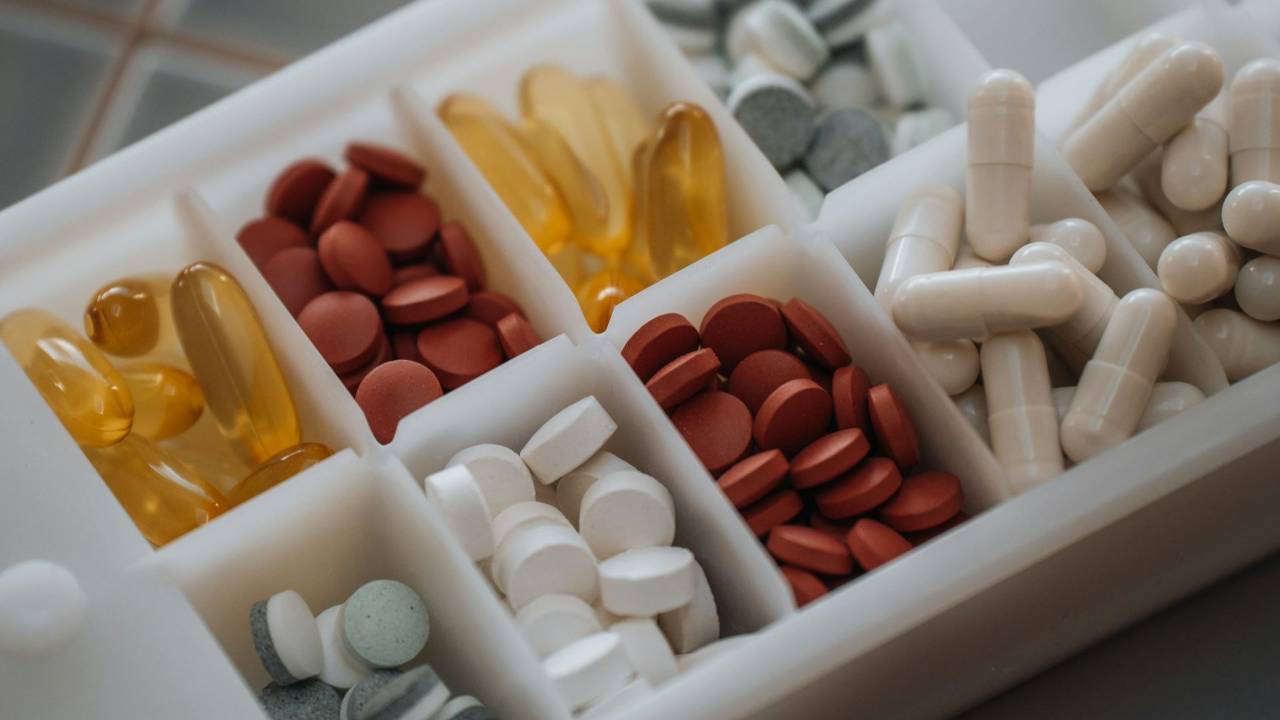
The everyday version is 5 grams a day for most people. When fatigue is the main problem, I go higher. I told a client on that same call, "I do think it's worthwhile to go up to 10 grams and see if that helps with the fatigue."
If you ordered creatine after my email a couple of weeks ago, you're probably taking 5 grams. Ten is the next step if the afternoons are still rough.
You don't have to take it all at once. Put 5 grams in your morning drink and sip the other 5 in water later in the day. If 10 grams gives you gas, split it further or go back to 5.
This is the creatine I use, from Momentous. I'm a Momentous affiliate and earn a commission on orders through my link.
The short version
- Fading by 11? Eat within an hour of waking, with 30 grams of protein. Coffee with breakfast, not instead of it.
- Fading by 3? Bed 30 minutes earlier, a 15-minute nap when you can, and your last coffee before lunch.
- Both? Creatine, 5 grams a day, 10 if fatigue is the main problem.
Your morning has a fuel problem, and your afternoon has a sleep problem. Fix them separately and you'll usually get both back.
Two ways to start
If the afternoons are the part of your day you'd like back, start with creatine and the 30-minute bedtime. Momentous Creatine.
If you've already done all of this and you're still dragging at 11 and at 3, it's time to look at labs and the bigger picture together. My next consult openings are in November. Book a consultation.
The fine print. Creatine is one of the most studied supplements there is, but if you have kidney disease, talk with your doctor before you start it. A big jump in fatigue, or fatigue with a racing heart, shortness of breath, or heavy periods, is a reason to see your doctor first.