Which Sleep Tracker Numbers Matter? Deep Sleep, REM, and HRV
Oct 20, 2026"How'd you sleep?"
"Hang on, let me check."
I've heard that from clients more times than I can count, and I've said it myself. You wake up feeling decent, grab the phone off the nightstand, and hold it at arm's length because your reading glasses are on the dresser. Your sleep score is 62.
Ten seconds ago you felt fine. Now you feel like someone who slept badly, and you'll carry that 62 around until lunch.
Meanwhile the person next to you, who got up twice and snored through most of the rest, scored an 81.
A ring or a wristband today will give you a sleep score, a readiness score, a stress score, a strain score, skin temperature, blood oxygen, breathing rate, and a "biological age" that seems to jump after a rough Tuesday. That's a lot of grades for eight hours of lying still.
Sleep doctors started seeing patients whose biggest sleep complaint came from the tracker itself. In 2017, a group at Rush University and Northwestern wrote up several of those cases and gave the problem a name, orthosomnia. The "ortho" part means correct, so it's roughly an obsession with sleeping correctly.
Out of that whole list, I pay attention to three numbers. If you learned to read only those three, you'd understand your sleep better than most people who've owned a tracker for years.
1. Deep sleep: about 80 minutes
Deep sleep is the stage where your brain waves slow way down and you're hardest to wake. It's also when your body puts out its biggest pulse of growth hormone, the hormone that helps you repair muscle and hold on to it as you get older.
That pulse shrinks with age. University of Chicago researchers pooled years of sleep lab data on 149 healthy men, from teenagers to men in their 80s. Deep sleep made up close to a fifth of the night for the youngest men, it dropped sharply by midlife, and growth hormone fell right along with it.
So when I open a client's data, my first question is, "Are you consistently getting about an hour and 20 minutes of deep sleep?" I'm looking at most nights over a few weeks, not last night.
If you're at 55 minutes, that's not a crisis. An extra 10 or 20 minutes can make a real difference in how you feel the next day.
I see it in my own numbers. When I'm using sermorelin, my deep sleep is better on the five days a week I take it, and I can usually pick out the weekends on the graph without looking at the dates.
The changes that move deep sleep most for my clients are boring ones. Most deep sleep happens in the first few hours of the night, so a bedtime 30 minutes earlier helps more than people expect.
A big dinner finished a few hours before bed helps. Alcohol hurts, and I'll show you how much in a minute.
2. REM: about 60 to 70 minutes
REM is the dreaming stage, and it's a strange one. Your brain is nearly as active as it is when you're awake, and at the same time it switches off most of your muscles so you don't act out what you're dreaming. You spend that time sorting through memories and whatever upset you during the day.
REM works the opposite way from deep sleep. Most of it comes at the end of the night, in the last couple of hours before you wake up.
So when the alarm goes off at 5:15 and your body was planning on 6:30, the 75 minutes you gave up were mostly REM.
I aim for 60 to 70 minutes. Some people need a little more, and some do fine with less. Of everything I've tried with clients, a wake-up time that holds on Saturday protects it best.
3. HRV: the trend, never one morning
HRV stands for heart rate variability.
A healthy heart doesn't tick like a metronome. The gaps between your heartbeats stretch and shrink a little all day, and when you're relaxed and recovering, they vary more.
A normal week for a healthy person can look like this: 46 on Monday, 52 on Tuesday, 33 on Wednesday after a work dinner, 49 on Thursday, and 44 on Friday. If you'd only looked on Wednesday, what would you have assumed? Most people would spend the day wondering what was wrong with them.
That's why sports scientists who track elite athletes use a seven-day average and watch which way it heads over several weeks. I do the same with clients. HRV also runs lower in your 50s than in your 30s for almost everyone, so compare your number only to your own.
Two things pull it down more than most people realize.
The first is alcohol, for men and women alike. A Finnish study tracked more than 4,000 working adults who wore heart monitors through their normal lives. On nights they drank, their overnight recovery score dropped about 9 points after a small amount and about 39 points after a lot, and being fit didn't protect them.
If you're thinking, "I only had two," two drinks put most people in the study's middle group. Their recovery score dropped about 24 points.
The second applies to women who still have a cycle. A review of 37 studies found that HRV runs lower in the second half of the cycle than the first, with the lowest readings just before a period. A dip that week is usually your cycle, and you'll probably see it again next month.
What a wristband can and can't see
No ring or band can read your brain waves. In a sleep lab, technicians glue sensors to your scalp and score the night in 30-second slices. A wearable has to estimate your sleep stages from your heart rate and how much you move.
When researchers at the Naval Health Research Center tested seven consumer sleep trackers against a lab sleep study, the devices were good at detecting sleep and weaker at catching the time people lay awake. On sleep stages, the results were inconsistent.
So I never take a deep sleep number to the minute. I take the trend, on the same device, worn the same way, over several weeks. If your deep sleep averaged 52 minutes in September and 71 in November, something changed, even if neither number is exact.
The targets I gave you come from years of looking at my clients' wearable data. A sleep lab would probably score your deep sleep lower, so use my numbers to compare this month with last month.
What I wear, and why I took the ring off
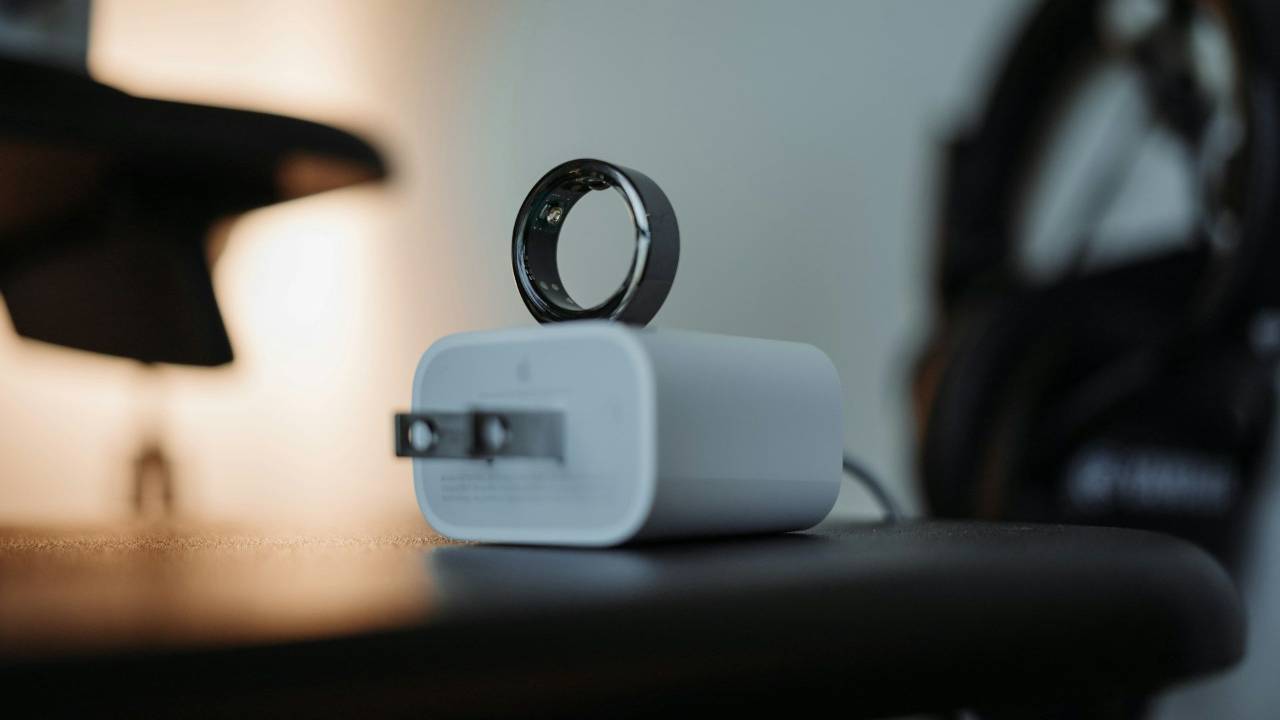
I wore an Oura ring for a couple of years and liked the data. What I didn't like was the pinch you get when a ring is trapped between your finger and a loaded barbell, or the handle of a shovel. It looked nice but wasn't as comfortable as I'd hoped it would be.
I usually took it off during exercise, which meant I missed out on tracking my most active time during the day.
So I switched to the Hume Band 2.0. It's thin, there's no screen, and most days I forget it's on my wrist.
It tracks deep sleep, REM, HRV, resting heart rate, and a long list of other numbers. The battery goes about two weeks between charges, and you don't have to pay a monthly fee to see your own data. For now, read the three numbers in this email and let the rest of the list wait.
I asked Hume for a discount for my readers. Here's a link to check it out.
Your next 30 days
- Check once a week. Sunday works. Write your average deep sleep, your average REM, and your seven-day HRV on a sticky note or in your phone.
- Change one thing. For most people I'd start with a bedtime 30 minutes earlier.
- Wait three weeks before you decide whether it worked. Then compare your Sunday notes.
And the next time someone asks how you slept, answer before you look. Then look, and see how close you got.
If your numbers have stayed low for months and you've already done the basics, something else is usually going on, like hormones, blood sugar dropping overnight, or histamine. That's what we sort out in a consultation.