The Brain Peptides Russia Has Used for Decades
Apr 09, 2026There’s a specific kind of exhaustion that doesn’t just come from doing too much.
It comes from your brain running two programs at once, and neither one working right.
One program is trying to think clearly.
The other is scanning for threats.
The result is that fog-plus-anxiety combination that doesn’t respond well to caffeine, adaptogens, or willpower.
You push harder to focus. The background noise gets louder. You try to calm down. The mental fog gets thicker. Nothing resolves both at the same time.
Most approaches target one or the other. Stimulants sharpen focus but worsen the buzz. Sedatives calm things down but flatten cognitive drive.
The problem is that the underlying mechanisms of both, depleted BDNF and weakened GABA signaling, are products of the same system: a stress response that’s been running too long.
Two peptides just became available through EllieMD that address both sides of this pattern simultaneously.
They’re called Semax and Selank. And while they’re new to most people in the US, they’re not new at all.
40 Years of Clinical Use You’ve Never Heard Of
Semax was developed in the 1980s at the Institute of Molecular Genetics in Moscow. Selank followed in the 1990s at the same institute.
Both went through formal clinical trials and became approved pharmaceuticals in Russia, where they’ve been in continuous clinical use ever since.
Semax is on Russia’s List of Vital and Essential Drugs. It’s used in Russian hospitals as a standard-of-care treatment for ischemic stroke and traumatic brain injury.
Selank completed Phase III clinical trials and is registered as a treatment for generalized anxiety disorder.
That’s not fringe science. That’s decades of clinical deployment, safety data, and physician experience in a country that was running controlled trials on neuropeptides while most Western researchers hadn’t heard of them yet.
The reason you haven’t heard about them until now is geography, not evidence. The research base is primarily Russian and Eastern European. Most of it was never translated or published in English-language journals. It existed in a separate scientific ecosystem.
What’s changed is access. EllieMD now offers both peptides through its US-based telehealth platform. You don’t have to source them from unregulated channels or piece together a protocol on your own.
Semax: Restore What Chronic Stress Has Depleted
Semax is built on a fragment of ACTH, the hormone that triggers your stress response. The researchers specifically engineered out the part that stimulates cortisol. What remains is a signal that goes straight to the brain to increase BDNF, brain-derived neurotrophic factor.
BDNF is sometimes called fertilizer for neurons. It drives neuroplasticity, memory consolidation, and the kind of cognitive resilience that lets you think clearly under pressure. It supports the repair and growth of neural connections. Without adequate BDNF, the brain adapts more slowly, retains less, and struggles to maintain focused attention.
Chronic stress is one of the fastest ways to deplete BDNF. So is poor sleep. So is the hormonal shift of perimenopause, when estrogen decline directly reduces BDNF synthesis in the hippocampus. This is one of the core mechanisms behind perimenopausal brain fog, and it’s one reason cognitive symptoms in this phase don’t always respond to hormone therapy alone.
Semax addresses this directly. In research, a single intranasal dose produced a 1.4-fold increase in hippocampal BDNF within three hours, with levels still elevated at 24 hours. In stroke patients, Semax increased plasma BDNF levels correlated with improved cognitive recovery.
It also modulates serotonin and dopamine through healthy turnover rather than receptor flooding or reuptake blocking. The result for most people is improved focus, sharper working memory, and a sense of mental lift that doesn’t come with stimulant jitteriness or a crash.
No tolerance or dependence has been documented across decades of Russian clinical use. That’s a meaningful data point.
Semax tends to fit best if you:
- Feel mentally slow or foggy, especially in the mornings
- Have gone through a period of prolonged stress, burnout, or illness
- Notice your thinking is slower or less sharp than it used to be
- Are navigating perimenopause and dealing with cognitive changes
- Feel flat, unmotivated, or like you’re working through mud mentally
- Want non-stimulant support for focus and cognitive performance
Tap here to get started with Semax.
Selank: Calm Without the Trade-Off
Selank is built on tuftsin, a peptide your own body produces naturally from immunoglobulin G. Its primary action runs through the GABA system, the brain’s main inhibitory network, the system responsible for turning down the volume on a nervous system that won’t settle.
Low GABA tone is the physiological signature of chronic anxiety. It’s also what benzodiazepines target. The problem with benzodiazepines isn’t that they don’t work. It’s everything that comes with them: sedation, cognitive impairment, tolerance, dependence, and withdrawal.
Selank modulates GABA-A receptors through a binding site that is distinct from where benzodiazepines bind. In a direct head-to-head clinical trial, Selank was compared to a standard benzodiazepine in 62 patients with generalized anxiety disorder. The anxiolytic effects were statistically equivalent. But patients on Selank also showed improvements in attention, working memory, and cognitive function during treatment. The benzodiazepine group showed the opposite.
No sedation. No tolerance. No dependence. No withdrawal. Comparable anxiety relief. That’s the gap that makes this worth paying attention to.
Selank also modulates cytokines, the immune signaling molecules that connect stress, inflammation, and immune reactivity. Under chronic social stress conditions, Selank reduced IL-1β, IL-6, and TNF-α to near-control values. For people dealing with MCAS or histamine sensitivity, where stress and immune reactivity tend to amplify each other in a feedback loop, this is a meaningful secondary effect.
Like Semax, Selank has shown no tolerance or dependence across its clinical history in Russia.
Selank tends to fit best if you:
- Feel anxious or on edge without a clear trigger
- Are easily overwhelmed or emotionally reactive
- Have a hyperactive nervous system that won’t settle, especially at night
- Deal with MCAS, histamine reactivity, or inflammatory imbalances
- Want calm without sedation or cognitive flattening
Tap here to get started with Selank.
Using Them Together: The Productive Calm Protocol
These peptides were developed at the same institute and are frequently co-prescribed in Russian clinical practice. The synergy is mechanistically clean.
Semax targets systems that are underperforming: depleted BDNF, reduced cognitive drive, blunted neuroplasticity from chronic stress. Selank targets systems that are overactive: excessive amygdala reactivity, weakened GABA tone, elevated inflammatory signaling.
The combination creates what’s often described as a productive calm state. Focused but not wired. Calm but not flat. It’s a state a lot of people haven’t felt in years and don’t realize they’re missing until they experience it.
Both are delivered as nasal sprays, which is the most direct route to brain tissue. Peptides administered intranasally travel along the olfactory nerve directly into structures like the hippocampus and prefrontal cortex, bypassing the gut and first-pass liver metabolism entirely. Onset is typically 15 to 30 minutes.
Protocol: 1 spray in each nostril, 1-2 times daily, 5 days on / 2 days off
Cycle: 8 weeks on, 2 weeks off. Each bottle is designed to last the full 8 weeks.
Semax is dosed in the morning. Its functional half-life runs 20-24 hours. Selank can be taken morning and again mid-afternoon or early evening.
If You Have MCAS or Histamine Sensitivity
New compounds and a reactive immune system don’t always mix well. That concern deserves a direct answer.
Both Semax and Selank share a structural component called Pro-Gly-Pro (PGP). PGP has been directly tested on isolated mast cells and shown to reduce histamine secretion by blocking calcium entry, similar in mechanism to cromolyn sodium. Tuftsin, the parent compound of Selank, has been specifically tested for mast cell degranulation and found to be inactive.
No published clinical reports of histamine-type adverse reactions exist for either peptide. That doesn’t mean zero caution is needed, but it does mean the mechanism is working in your favor, not against you.
If you have MCAS, this is a logical way to start:
- Introduce Selank alone first and use it for 3-5 days before adding Semax
- Begin at half the standard starting dose and titrate up slowly
- Keep your antihistamine and mast cell stabilizer protocol in place
- Dose in the morning, when mast cells tend to be more stable
Available Now Through EllieMD
Semax and Selank are now available through EllieMD as prescription nasal sprays. All prescriptions require a brief medical consultation through the platform, which is included in the process, and is completed online so you don't need to leave your home to get started.
Learn more and get started through EllieMD
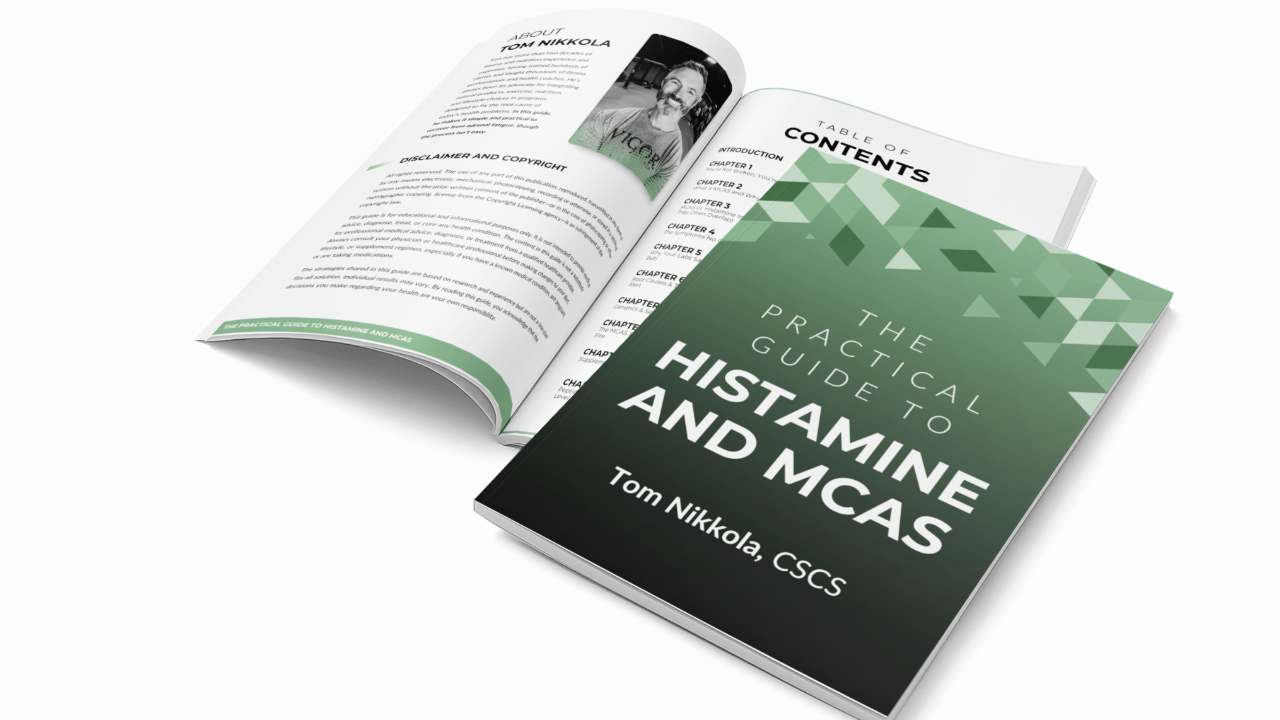
If you want to work through the bigger picture first, especially if you’re managing MCAS, adrenal dysfunction, MTHFR, or perimenopausal hormone changes, a consultation can help you sequence things in an order that makes sense for your full situation.
Book a one-on-one consultation with me to build out your full nutrition, lifestyle, exercise, supplement and peptide plan.