Your Body Has a Morning Alarm. Is Yours Even Going Off?
Apr 03, 2026You wake up, but you don't really wake up.
You sit on the edge of the bed. You stare at nothing. You calculate whether you can survive the morning without coffee, decide you cannot, and shuffle toward the kitchen.
You've written this off as not being a morning person. But that's not a personality trait. It's a physiology problem, and it has a name.
Meet the Cortisol Awakening Response
Within the first 30 to 45 minutes after you open your eyes, your cortisol levels are supposed to spike. Not slowly. Not gradually. Sharply.
This spike is called the Cortisol Awakening Response, or CAR. It's one of the most reliable biological events in a healthy human body, and most people have never heard of it.
The CAR is distinct from your baseline cortisol levels. It's a specific, patterned surge driven by your brain's internal clock, the suprachiasmatic nucleus (SCN), signaling the HPA axis, which is your hypothalamus, pituitary, and adrenal glands, to prepare you for the demands of the day.
When it's working, you feel alert within 20 to 30 minutes of waking. When it's blunted or flat, you feel like you're moving through wet concrete until mid-morning.
What the CAR Is Actually Doing
Cortisol gets a bad reputation because people associate it with chronic stress and burnout. But that's a misreading of the hormone.
Cortisol is your body's primary activating signal.
It mobilizes glucose for energy, primes your immune system, sharpens cognitive function, and initiates dozens of downstream hormonal processes.
You need it. You especially need it in the morning.
The CAR specifically does the following:
- Activates metabolic processes that fuel morning cognitive performance
- Resets immune tolerance and prepares immune surveillance for the day
- Stimulates dopamine and norepinephrine pathways, which drive motivation and focus
- Initiates thyroid hormone activation at the cellular level
- Regulates the expression of hundreds of genes involved in stress resilience and cellular repair
That's a lot of work happening in a 45-minute window. If the CAR is blunted, none of those systems get a clean start.
Why Your CAR Might Be Flat
A healthy CAR produces a cortisol rise of roughly 50 to 160 percent above baseline. Research shows that a blunted or absent CAR is associated with several patterns that will sound familiar.
Chronic stress and burnout are the most well-documented. When the HPA axis is repeatedly over-activated, it downregulates cortisol output as a protective mechanism. This is sometimes called HPA axis dysregulation, though you're probably more familiar with the term "adrenal fatigue."
The underlying issue isn't that your adrenal glands are exhausted. It's that the signaling loop between your brain and your adrenals has become desensitized.
The alarm is going off, but the response has gotten quieter.
Poor sleep architecture matters more than sleep duration. Even if you're sleeping 7 or 8 hours, fragmented sleep, poor deep sleep, or elevated nighttime cortisol all impair CAR magnitude the next morning.
Light deprivation is a sleeper issue. Morning light exposure through your eyes is one of the primary triggers for a robust CAR. The photosensitive retinal cells that drive your circadian rhythm feed directly into the SCN. Without morning light, the signal is weak.
Post-viral or inflammatory states blunt CAR by disrupting both HPA axis signaling and circadian rhythm regulation. If you've never felt fully right since a significant illness, this is one of the mechanisms worth examining.
High nighttime cortisol is its own pattern. Some people don't have low cortisol across the board. They have cortisol at the wrong times. Cortisol high at night, flat in the morning. This is a circadian inversion, and it's miserable. You can't sleep. You can't wake up. And you feel terrible all day.
The Pattern That Makes People Feel Dismissed
Here's where this gets clinically important.
A blunted CAR rarely shows up on a standard morning cortisol blood test. That test is typically drawn somewhere between 8 and 10 a.m., which captures the tail end of what the CAR has already done.
If you drew cortisol at the peak of a healthy CAR (around 30 minutes post-waking), then again at 8:30 a.m., you'd see a meaningful drop.
But most labs just draw one point and call it normal.
If your doctor says your cortisol is "normal" but you still feel awful every morning, the test didn't capture what matters.
The Cortisol Awakening Response requires a timed sample, not a single data point.
DUTCH testing, which involves timed urine or dried urine samples, is one way to capture the CAR pattern more accurately.
Four timed saliva samples taken immediately upon waking, then at 30, 45, and 60 minutes, can map the shape of the response.
The shape matters as much as the absolute value.
What a Blunted CAR Feels Like Day-to-Day
You might recognize some of these:
- Zero cognitive function until after the first coffee or two
- Morning anxiety or dread before anything has actually gone wrong
- Best mental clarity and energy arriving in the afternoon or evening
- Feeling wired but tired at night, then groggy the next morning
- Slow recovery after hard workouts or stressful weeks
- Immune system that seems to fire up with every passing cold or allergen
- A general sense that your body is running on reserve power
How to Support a Healthier CAR
The good news is that the CAR is modifiable. It responds to inputs. Here's what the research and clinical practice support:
- Get outside light within 15 to 30 minutes of waking. Even on overcast days, outdoor light is 10 to 50 times brighter than indoor lighting. That photon input drives the SCN signal that primes the cortisol surge. This is not optional if you want a healthy CAR. If you get up too early for that kind of sunlight, get a sun lamp.
- Don't sleep in past your natural wake window. Your SCN expects to initiate the CAR at a consistent time. Weekend sleep schedule drift, even 90 minutes of it, can blunt the CAR for days afterward. Consistency matters more than duration.
- Prioritize sleep quality, not just quantity. The CAR is largest when slow-wave sleep was adequate the night before. If you're sleeping but not restoring, your cortisol won't surge cleanly in the morning. Magnesium glycinate, sleep environment optimization, and reducing late-night blue light all support this. Next level sleep support like Sermorelin can make a significant difference, too.
- Time your caffeine correctly. Cortisol and caffeine use overlapping mechanisms. If you drink coffee immediately upon waking, you may actually blunt your natural cortisol surge. Waiting 60 to 90 minutes after waking to have your first coffee lets your CAR do its job before caffeine steps in. Yes, this is hard. Yes, it makes a real difference.
- Address the upstream issue. If chronic stress, HPA axis dysregulation, or post-viral patterns are driving a flat CAR, surface-level lifestyle tweaks won't be enough. Adaptogenic herbs like ashwagandha and phosphatidylserine have research behind them for modulating HPA axis output. Strategic nutritional support for adrenal function, particularly vitamin C, B5, and adequate sodium, also matters.
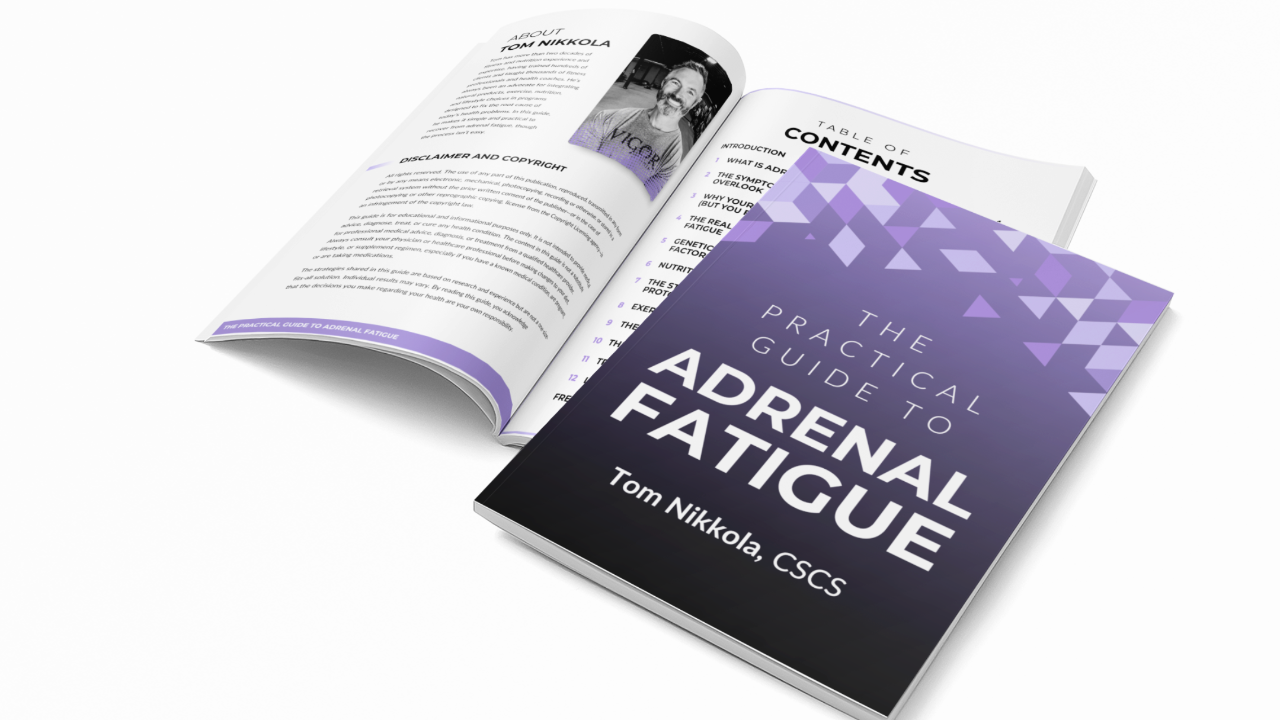
If you suspect HPA axis dysregulation is part of your picture, my Adrenal Fatigue Guide goes deeper into the mechanism, testing approaches, and a structured support protocol.
One More Thing Worth Knowing
The CAR doesn't just affect how you feel in the morning. It calibrates your entire stress response architecture for the rest of the day.
A strong, healthy CAR tells your body's systems that resources are available, threats are manageable, and you're ready to operate at full capacity. A flat CAR sends a different signal. It tells every downstream system that resources are scarce and the threat level is unclear.
That changes how your immune system behaves. It changes how you respond to emotional stress at 2 p.m. It changes your appetite, your cravings, and your ability to recover from exercise. The CAR isn't just a morning inconvenience. It's the first domino in your daily physiology.
Where to Go From Here
If your mornings are consistently rough and you've written it off as a personality trait or just how you're built, there's more to examine.
Start with the basics: consistent wake time, outdoor morning light, and delaying your first coffee by 60 to 90 minutes. Track how you feel at 8 a.m. for two weeks. The data will tell you something.
If you want a more complete picture of your HPA axis, cortisol rhythm, and what's driving your energy patterns, book a consultation. That's where we can look at your actual numbers and build a protocol around what you specifically need.
And if you want to go deep on the adrenal and HPA axis piece, the Adrenal Fatigue Guide is the place to start. That link gives you $20 off, too!