Once cause of sleep issues people don't think about
Oct 27, 2026It rained hard last night.
We have two Shih Tzus, Gidget and Gertie, and Gidget is far more afraid of noise than Gertie. At night they sleep in couple of small rooms off our kitchen, where we have a coffee bar and my wife's office. Every time the rain picked up, Gidget stood at the gate and whined.
For years, both dogs slept in our bed with us, until we finally admitted they were costing us too much sleep. We weren't going to undo that over one storm.
So after a couple of trips from bed to try to settle her down, I decided to let them sleep on the couch with me and let my wife get a good night's sleep in our bed.
Whenever I sleep on the couch (because of a cold or a nervous dog, never because of an argument), I usually grab one of the throw pillows off the couch. I've done it enough times to know how the next morning goes. My neck is stiff, my head is foggy, and I conclude, again, that couches are terrible places to sleep.
This time I took my own pillow with me.
About a month ago, the pillow I'd been using started leaving my neck stiff in the morning. It was a little thicker than I needed, so one night I grabbed one of the decorative king pillows off our bed. These are the soft ones whose main job is to get stacked on the bed every morning and moved to a chair every night.
I slept well on it, so I slept on it again the next night, and the next. I never went back.
So there I was on the couch at 2 a.m. with a decorative pillow and a mild grudge against the weather, and I had a fantastic night of sleep.
For years, I'd blamed the couch. It was probably the pillow the whole time.
The question nobody asks
Most of the people I work with are good at sleep hygiene. They've bought the magnesium, the blackout curtains, and the white noise machine, and they've mostly stopped scrolling in bed.
When their sleep is still poor, we look at cortisol rhythm, blood sugar overnight, histamine, and hormones. Those are usually where the bigger answers are.
But I can't remember ever asking a client what their pillow looks like.
Nobody else asks either. When you wake up with a stiff neck, what you hear is, "You must have slept on it wrong," as if you made a poor decision while unconscious.
So I went looking for what the research says about pillows. Some of it surprised me.
Researchers made people sleep on five pillows
A pair of researchers in South Australia ran one of the most practical pillow studies I've found. They gave people five pillows (polyester, regular foam, contoured foam, feather, and latex) and had them sleep on each one for a week.
Between trial weeks, everyone went back to their own pillow, and every morning they wrote down whether they woke with a stiff neck, a headache, or pain in the shoulder or arm.
The feather pillow did the worst. It produced the most morning symptoms, and more people dropped out during feather week than any other week. Latex did the best.
Two other findings stood out to me. The contoured foam pillow, the wavy one that looks like an engineer designed it, did no better than the plain foam pillow. And people's own pillows didn't guarantee symptom-free mornings either.
That last one is worth sitting with. A lot of us wake up with a tight neck or a dull headache and file it under getting older, when the cause might be eight inches under our head.
A larger review pulled together nine high-quality pillow trials with 555 people who had chronic neck pain. The right pillow reduced morning pain and neck disability. But when the researchers looked at sleep quality scores, pillow design didn't change them.
Almost all pillow research measures necks, not sleep. Very few studies have put people in a sleep lab and measured what happens to deep sleep on different pillows, and most of the studies are small, short, and done with young, healthy adults.
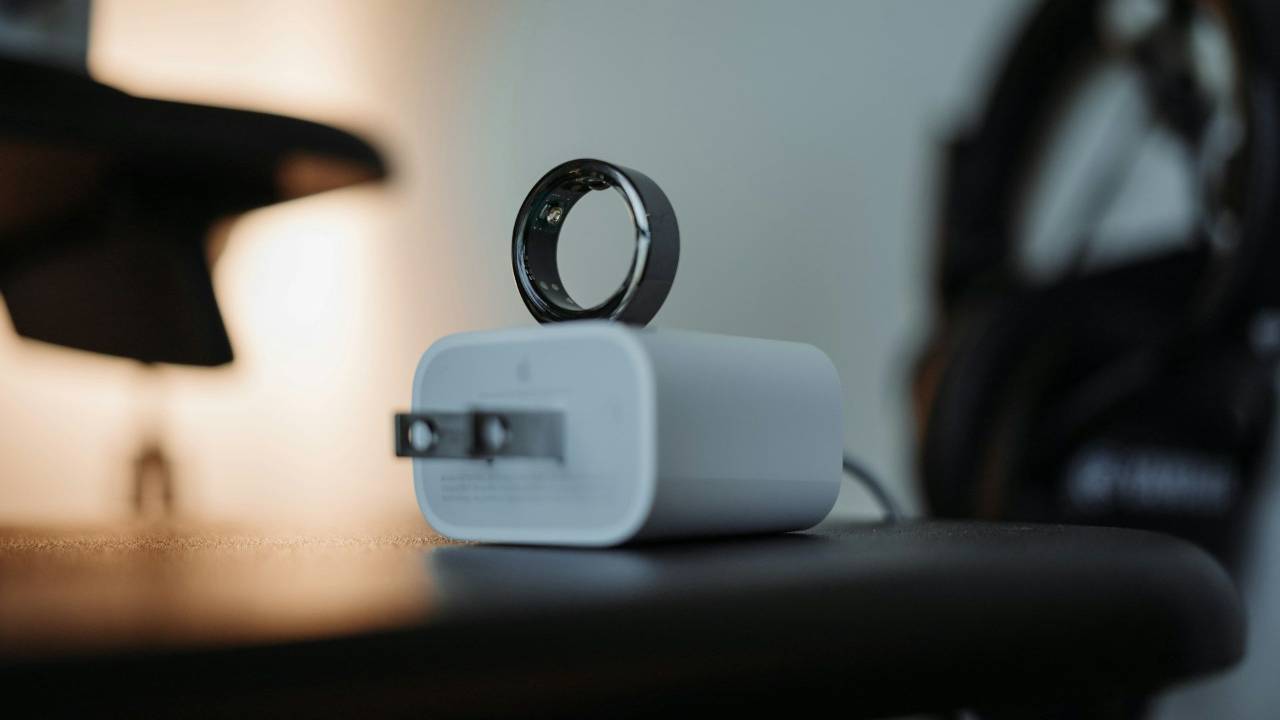
However, the best way to see if a pillow makes a difference for you, personally, is to try it and see what happens. If you wear a sleep tracker like the Hume Band, you'll be able to see objective data along with your subjective feelings in he morning.
So what follows is what we know about pillows and your neck, your temperature, and allergens, plus some practical sense. Nobody has published the study that proves a new pillow will fix your sleep.
Height matters more than anything else
If the research agrees on one thing, it's that the height of your pillow matters more than what it's made of.
A team in China had side sleepers lie on pillows set at three heights based on each person's shoulder measurement: lower, matched, and higher. At the matched height, the muscles along the side and back of the neck worked the least, and people rated it the most comfortable. The low pillow made the muscle along the side of the neck work harder, and the high pillow made the muscle running from the neck to the top of the shoulder work harder.
Another group found something I appreciated. The height that kept the neck closest to its natural curve wasn't quite the height people liked best. Most preferred a pillow slightly lower than the ideal, which tells me comfort is a decent guide but not a perfect one.
For back sleepers, researchers in Hong Kong found that raising the pillow increased pressure on the back of the head and neck and changed the curve of the neck substantially.
What to look for, by how you sleep
Side sleepers. You need the most height, enough to fill the space between the mattress and your head so your head stays level with your spine. If you wake up with tightness along the side of your neck or across the top of your shoulder, your pillow height is the first thing I'd check. People with broad shoulders usually need more height, and a softer mattress usually calls for less, because your shoulder sinks further into it.
Back sleepers. Go lower and supportive. You want your head level, not tipped forward toward your chest.
Stacking two pillows is one of the most common habits I'd drop. In a 2026 study, propping the head up on two pillows raised eye pressure in people with glaucoma and narrowed the big veins in the neck of healthy volunteers. That's a specific group, but it's a good reminder that stacking pillows isn't a harmless habit.
Stomach sleepers. Nobody has studied pillows for you, which seems fitting, since you already spend the night with your head turned nearly as far as it goes.
This is actually my preferred sleep position, too, even after I broke my neck and had C5-C7 fused four years ago. A very thin pillow, or no pillow at all, keeps you from adding an upward bend on top of the twist. If you can train yourself to sleep on your side, your neck will be under a lot less strain (yes, I'm reminding myself, too).
Combination sleepers. You're the best case for an adjustable pillow with shredded fill. You can push it taller when you're on your side, and it flattens when you roll onto your back.
What it's made of
Latex has the strongest record in the research. It outperformed every other pillow in the week-by-week study, and rubber and latex pillows came out ahead for neck pain in the larger review. It also holds its shape for years.
Feather pillows feel soft and look inviting, but in the research they gave people the least support and the most morning symptoms.
Memory foam conforms nicely, but it holds heat. In one comparison, memory foam and feather pillows warmed up significantly more over 30 minutes than a shaped orthopedic pillow did.
Heat is the part most people miss
To fall asleep and stay asleep, your body has to shed heat. A pillow that traps it works against you.
In a Japanese study, researchers had people sleep through the night on either a cooling pillow or a regular polyester one. On the cooling pillow, core temperature and heart rate stayed lower in the second half of the night, and every participant said it was the better pillow for deep sleep.
In a more recent trial, women who were having hot flashes during hormone therapy after breast cancer used a cooling pillow topper for several weeks. Their sleep efficiency improved almost twice as much as it did for the women who didn't use one.
If you're in perimenopause, or you're the guy who kicks the covers off at 2 a.m., this is one of the cheapest things you can try.
There's also a nervous system piece here. One small study of 12 adults with chronic neck pain found that a better-fitting pillow did more than reduce pain. Their heart rate variability shifted toward the calmer side of the nervous system, and their body temperature at night came down.
Twelve people isn't much to go on. But it fits what I'd expect. If the muscles in your neck are working all night to hold your head in an awkward position, it's hard for the rest of you to settle.
Allergens: the usual advice may be backward
If you have allergies, someone has probably told you to avoid feather pillows. New Zealand researchers measured dust mite allergen in 81 pillows from people's homes and found the opposite. The synthetic pillows held about seven times more mite allergen than the feather pillows.
Nobody has run a trial proving feather pillows are better for allergic people, so I wouldn't rush out to switch. What I take from this is that the age of your pillow and how often you wash it probably matter more than what's inside it.
Allergy-proof pillow covers are the other standard recommendation. A Cochrane review found that covers on their own are unlikely to help allergic rhinitis. The approaches that showed promise reduced mites across the whole bedroom, not just the pillow.
A few other things worth knowing:
- Wash your pillowcase weekly, and wash or replace the pillow itself regularly. Sleep experts generally suggest replacing pillows every one to two years, though good latex and foam pillows can last longer.
- If you're sensitive to smells or chemicals, unwrap a new foam pillow and let it air out in another room for a few days. In one study of new memory foam mattresses, chemical emissions peaked on the first day and dropped steadily over the next month.
- If you have a latex allergy, skip latex pillows, even though they top the research.
What to buy
You don't need an expensive pillow. You need one that fits you. My best night of sleep this month came from a decorative pillow on a couch.
That said, if you want to invest in a better pillow, here's where I'd look. These brands have done well in independent testing, and I don't have a relationship with any of them.
- If you want to adjust the height yourself: the Coop Original Adjustable or the Silk & Snow Adjustable. Both come with shredded memory foam that you can add or remove until the height feels right.
- If you want latex: the Saatva Latex Pillow, which comes in two heights (the taller one suits side sleepers), or the Brooklyn Bedding Talalay Latex Pillow, which works well if you switch between your side and your back.
- If you sleep hot and want to spend less: the Brooklinen Marlow, which warmed up less than most pillows in AARP's testing.
- If you want the high-tech option: the Eight Sleep Pillow Cover slides over your existing pillow and circulates water anywhere from 55 to 110°F. It needs the Eight Sleep Hub to run and costs over $1,000, and nobody has published research on it yet. I'd try an inexpensive cooling pillow first.
Whatever you buy, check the sleep trial before you check out. You'll want the option to send it back.
The two-week pillow test
Here's how I'd approach this if you want to know whether your pillow is part of the problem.
- Take notes for three mornings. Before you get out of bed, write down how your neck feels, whether you woke with a headache, and roughly how many times you woke up during the night.
- Check your alignment. Ask your partner to look at you while you're lying in your usual position. Your head should line up with your spine. It shouldn't tilt up toward the ceiling or droop toward the mattress.
- Change one thing and give it a week. That's how long the South Australian researchers gave each pillow, and it's long enough to get past the first strange night or two.
- Compare your notes. If your mornings are better, you have your answer. If nothing changed, you've ruled out one thing and can move on to the next.
We spend a lot of money and effort trying to sleep better. I spent years blaming the couch, so check the pillow first.
If your pillow is sorted and you're still waking up at 3 a.m., the cause is usually somewhere else, like cortisol rhythm, blood sugar, or histamine. I've put the sleep-support supplements I use most often with clients together in one place on Fullscript. You can find them here.
If you've already done the basics and your sleep still isn't where you want it, that's what a consultation is for. We'll look at the whole picture together and figure out what to change first. You can book a consultation here.