DAO needs more than a pill
Apr 27, 2026You've cut the wine. You skip the leftovers. You stopped touching aged cheese and fermented anything months ago.
You take DAO before meals. Maybe quercetin too. Maybe a low-histamine probiotic.
And you still flush. You still itch. Your nose still runs at 4 a.m. for no clear reason.
If that's where you are, the problem isn't your willpower. It's that you've been told histamine intolerance is a food problem, when it's really an enzyme problem.
And the enzyme is starving.
Why Elimination Diets Hit a Wall
When histamine reactions ramp up, the standard advice is to remove. Remove fermented foods. Remove leftovers. Remove citrus, tomatoes, spinach, vinegar, alcohol, chocolate, anything aged or canned.
For a few weeks, it helps. The bucket drains a little. You feel human again.
Then the wall shows up.
You add one food back, even something gentle, and the symptoms return. Or worse, you stay strict and the symptoms come back anyway, triggered now by stress, your cycle, or a poor night of sleep.
Here's why: diet is the input side. DAO is the drain. If the drain is clogged, no amount of restriction empties the sink.
What DAO Actually Is, and Where It Lives
Diamine oxidase (DAO) is the enzyme your body uses to break down histamine in the gut before it ever reaches your bloodstream.
It lives mostly in the lining of the small intestine. When you eat, it goes to work on the histamine in your food and on the histamine your gut microbes produce.
If DAO is plentiful and active, you can eat a glass of red wine with aged cheese and feel fine. If DAO is sluggish or underbuilt, even a clean meal can leave you flushed an hour later.
The enzyme is the bottleneck. Most people are still focused on the food.
The Five Nutrients DAO Cannot Function Without
DAO is a copper-dependent enzyme. It also relies on a small group of cofactors to do its job. Without them, the enzyme is essentially built but offline.
Here are the five it needs most:
- Copper. This is the metal at DAO's active site. Low copper, low DAO. Period.
- Vitamin C. Required for histamine breakdown and for keeping copper in a usable form.
- Vitamin B6 (P5P). Acts as a cofactor for DAO and for the broader histamine-clearance pathway.
- Magnesium. Supports enzyme stability and downstream histamine processing.
- Zinc. Helps maintain gut lining integrity, where DAO is actually produced.
The catch is that women in their 40s, especially those who've been low-protein, low-red meat, or heavy on plant-only eating, are often low on copper, B6, and zinc without knowing it. Throw in chronic stress and the deficit gets worse.
You can take DAO capsules forever. If the cofactors aren't there, your own gut is still under-producing the enzyme between doses.
The Daily Habits That Block DAO
DAO doesn't just get built. It also gets blocked.
A few of the most common culprits:
- Alcohol. Even one drink can suppress DAO activity for hours. Wine is a double hit because it's high in histamine and a DAO inhibitor.
- NSAIDs. Ibuprofen, naproxen, aspirin. All reduce DAO activity in the gut lining.
- SIBO and gut dysbiosis. Overgrown bacteria produce histamine on their own and damage the cells where DAO lives.
- Chronic stress. Elevated cortisol thins the gut lining and reduces enzyme output over time.
- Certain medications. Some antidepressants, antibiotics, and acid blockers further suppress DAO.
If you're rebuilding the enzyme with one hand and blocking it with the other, you'll feel stuck. This is why the woman who finally addresses her SIBO often sees her histamine reactions improve more than any elimination diet ever delivered.
The Hormone Layer Most People Miss
Histamine and estrogen sit on a seesaw. Estrogen raises histamine. Histamine, in turn, stimulates more estrogen.
This is why so many women notice their histamine symptoms spike around ovulation and again in the luteal phase, when estrogen surges. It's also why perimenopause, with its erratic estrogen swings, often looks like new-onset histamine intolerance.
Progesterone is the calming half of the equation. It supports DAO production directly. As progesterone falls in the late 30s and 40s, DAO output often falls with it.
So the symptom pattern many women describe, "I was fine until my mid-40s, and now everything triggers me," isn't random. It's hormonal load on a cofactor-starved enzyme.
Build the Enzyme, Don't Just Replace It
Taking DAO capsules with meals can help in the short term. It's a real tool, not a placebo.
But supplementing DAO without rebuilding your own production is like running a generator instead of fixing the wiring. It works while it's on. It does nothing the moment you stop.
A more sustainable approach looks like this:
- Cover the cofactors. A high-quality multivitamin or a targeted stack with adequate copper, B6, vitamin C, magnesium, and zinc.
- Address the gut. Rule out and resolve SIBO if it's there. Rebuild the gut lining with protein, glutamine, and time.
- Reduce DAO blockers. Alcohol matters more than people want to admit. So do daily NSAIDs.
- Support hormones. Improve estrogen clearance through methylation and the gut. Protect progesterone with sleep, stress regulation, and adequate body fat.
This is the part of histamine work that nobody puts on a low-histamine food list, because it's not a food list at all.
Mast Cells vs DAO: Two Different Levers
DAO is the gut-side cleanup crew. Mast cells are the alarm system that releases histamine in the first place, all over the body.
If your reactions are mostly gut-based, food-triggered, hit you within an hour of eating, DAO support tends to deliver the biggest wins.
If your reactions are systemic, hives, flushing, anxiety, brain fog, full-body itching, sensitivity to scents and weather, mast cell stabilization usually has to come first. Quercetin, vitamin C, luteolin, and in some cases peptides like KPV can calm mast cells while you rebuild DAO underneath.
The mistake is treating one and ignoring the other. Most women in this stage need both, layered.
The Bigger Picture
Histamine intolerance is rarely just a histamine problem. It's a gut, hormone, and nervous system problem expressing itself through one overworked enzyme.
That's actually good news. It means you have more than one lever. You don't have to live on a list of 12 approved foods forever.
A few practical next steps:
- Audit your cofactors. A solid foundational nutrient base is non-negotiable. The Foundational Five at Fullscript is a great place to start.
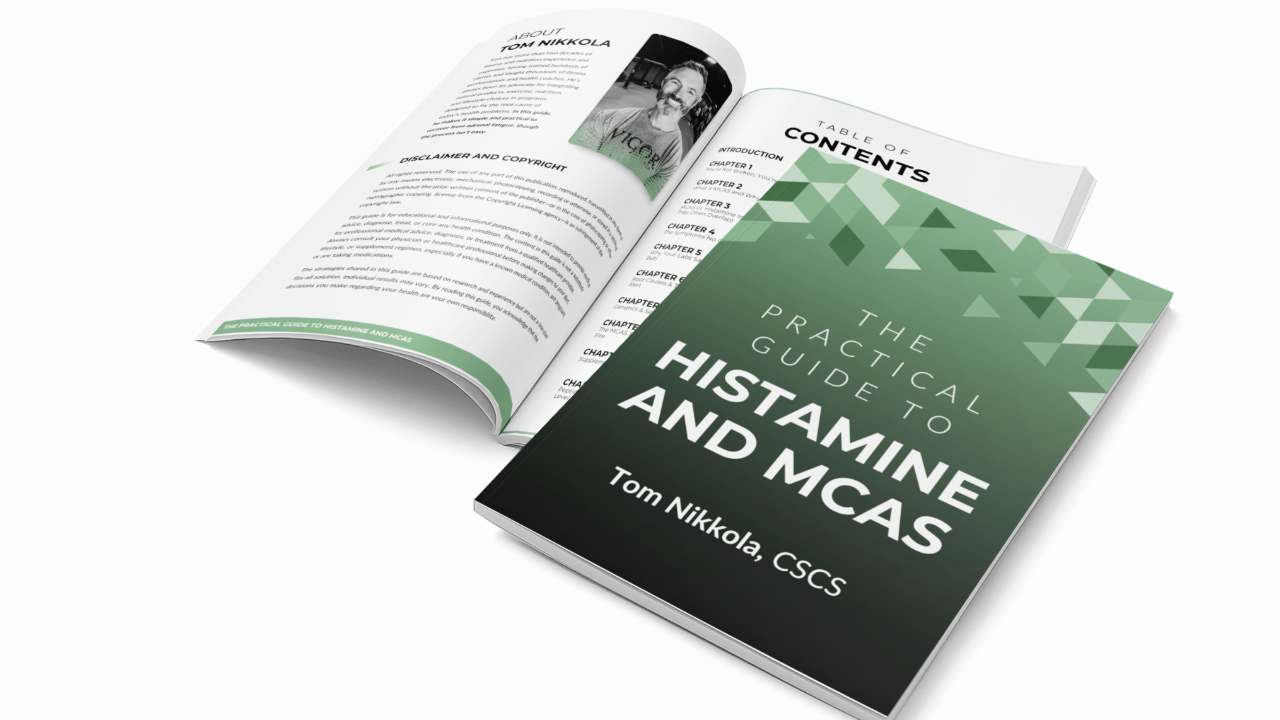
- Read the full mechanism. The Histamine & MCAS Guide walks through DAO, mast cells, hormones, and the order to address them.
- Rule out gut drivers. If you suspect SIBO, the SIBO Guide is the next read.
- Get personal eyes on it. If you've done the reading and you're still stuck, book a consultation. Some patterns need to be untangled in real time.
The goal isn't a smaller food list. It's a bigger life with a stronger enzyme behind it.