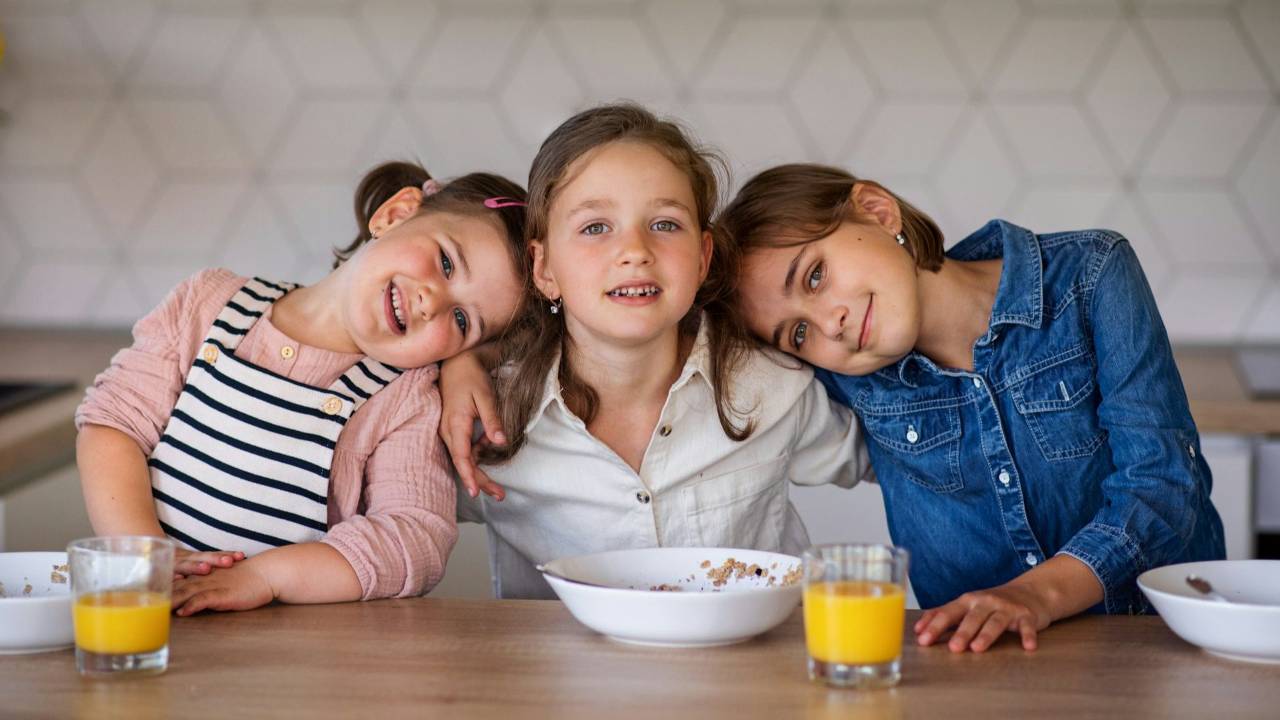
Grades, mood, and the breakfast problem
Sep 08, 2026It's 7:05.
The backpack is by the door, one shoe is missing, and somebody is yelling about a permission slip that was due yesterday.
So you hand your child a granola bar and a glass of juice, because that's what fits in the four minutes you have.
I'm not going to tell you that's a parenting failure. That's a Tuesday.
But I want you to see what happens over the next eight hours, because almost nobody connects the two.
The 10 a.m. slump. The email from the teacher about focus.
The child who walks in at 3:30, eats everything in the pantry, and is somehow still miserable. Then the mood swing at 6 p.m. that has nothing to do with anything anyone said.
Why does the slump land at the same time every single day? Why is a child who slept nine hours foggy by second period?
For a lot of kids, the answer starts with what was in their hand at 7 a.m. Or more exactly, with how little protein was in it.
First, what protein actually does
Let me say this plainly, because the word gets tossed around like a marketing term.
Protein is the material your child's body builds with. Bone, muscle, skin, hormones, enzymes, and the antibodies that deal with a virus all get made out of it.
There's no storage tank for it either, so when a kid runs short the body takes what it needs out of muscle, which is the last thing you want in a growth year.
Eggs, meat, fish, milk, yogurt, cheese, and beans carry a lot of protein.
Cereal, granola bars, crackers, bread, pasta, chips, and fruit carry very little of it, and that list is most of what ends up in a school day.
So when I count grams from here on, protein is what I'm counting.
Now count the protein. Then look at when it shows up.
Here's what a normal school day adds up to.
- Cereal with milk: 8 to 10 grams of protein
- Granola bar between classes: 3 to 5 grams
- Turkey sandwich, chips, an apple: 10-15 grams (unless you load it with meat)
- Crackers after school: 2 grams
- Dinner: 20 to 30 grams, assuming your child eats what you eat for dinner
That lands between 43 and 66 grams. The official minimum for a 140-pound teenager sits around 54, so on paper that day passes. It means he or she won't display deficiency symptoms, because that's what the daily recommendations are based off of.
I don't coach to the minimum.
A teenager who trains does better somewhere in the 90 to 130 gram range, and in twenty-five years of reading food logs I can tell you almost none of them are close.
One gram per pound bodyweight is more ideal.
The shortfall matters. The timing matters more.
The cleanest numbers come from an Irish national food survey of about a thousand people: breakfast averaged 15 grams, lunch 30, dinner 44. Those are adults, not teenagers, and I'd rather have the teenage version.
But it's the shape I see in every family food log a client sends me, and if anything a child's day is more back-loaded than an adult's.
Your child builds around the clock. You're handing them the material once, at night, after school and practice are already over.
The 9 a.m. problem
Now add what cereal and juice do on their own.
Blood sugar climbs fast. Insulin comes up to bring it down, overshoots, and leaves them lower at 10 a.m. than they were when they walked in the door.
That's the fidgeting, the yawning, and the "I can't focus" that lands in the same class every day.
I'll be straight about this research. Two systematic reviews on breakfast and school performance both found the studies small and inconsistent, though the one result that keeps turning up anyway is that a gentler blood sugar response after breakfast lines up with better focus that morning.
Protein and fat are what flatten that curve, which is the real argument for eggs at breakfast, and it holds up a lot better than the story you usually hear about protein feeding your child's brain chemicals.
The longest-running data comes from a six-year study that followed Chinese children from age 6 to 12. Kids who ate breakfast regularly scored about 5.5 points higher on verbal IQ and 4.4 points higher on full-scale IQ than the kids who rarely did.
When researchers looked at what was in that breakfast, the children eating meat or eggs six or seven mornings a week scored higher. So did the kids eating rice or grain that often, which cuts against the tidy version of my argument.
Where they split was school marks. Regular meat and egg eating showed up there. Grain didn't.
Mood, and the part parents underestimate
Swiss researchers followed 97 teenage athletes for 10 months, tracking what they ate and measuring depression scores at the end.
Higher protein intake predicted lower depressive symptoms at follow-up. Carbohydrate didn't. Fat didn't.
Protein was the one macronutrient that moved. The authors call the work exploratory, and 97 kids is 97 kids.
A separate study of 546 children ages 13 to 15 in Delhi found that the ones eating the least protein, milk and legumes especially, carried higher depression and anxiety scores than their classmates.
Those are associations. I'm not telling you eggs treat a mood disorder.
I am telling you that when a kid is irritable, flat, and reactive by dinnertime, protein belongs on the list of things you check before you land on hormones or attitude.
There's a second half, and I think it's the more urgent one. In Barcelona, researchers tested 653 kids ages 12 to 16 on attention, working memory, decision-making, and emotion recognition.
The children eating more ultra-processed food scored worse on attention and emotion recognition, made poorer choices on a risk task, and reported more anxiety and low mood.
Six months later, two of those still held: more anxiety and low mood, and poorer choices under risk. The rest didn't, and the authors call the long-term picture limited.
So the missing protein is one problem. What takes its place looks like a second one.
What protein has to do with getting sick
I get the same emails every fall, from a parent whose child started school three weeks ago and has already been sick twice.
This is where health writing usually oversells, so let me not.
Antibodies are proteins. So are cytokines. The T cells and B cells that recognize a virus get built out of amino acids, and researchers established decades ago that protein malnutrition impairs every part of that.
Malnutrition is the operative word there, because all of that research is about genuine deficiency, and a kid eating 70 grams a day is nowhere close to it.
So does a protein shake keep a child from catching what's going around? No. The September pileup tracks with a sleep schedule that shifted 90 minutes in late August, a building holding 900 kids, and a training load that tripled in a week.
Protein supports the repair. It isn't doing the protecting.
One practical piece. When a child does get sick, protein needs go up while appetite goes down, which is when I tell parents to stop negotiating over a real meal and just get something in.
A shake. A smoothie with Greek yogurt. Chicken broth with actual chicken in it.
Muscle, sport, and a window that closes
The muscle a person builds during puberty is the muscle that carries them into their forties, and it's the widest window they will ever get, closing on schedule whether or not anybody used it.
So what happens to the child who spends those years eating cereal?
Muscle building responds to how much protein lands in one sitting. A small serving does a little, while a serving in the 20 to 40 gram range does considerably more before the response levels off.
Reach that range four or five times a day and they're building through most of their waking hours. Reach it once, at 7 p.m., and they aren't.
For a 150-pound child who trains, the sports nutrition guidance works out to roughly 95 to 135 grams a day, in 20 to 40 gram servings, three to four hours apart.
You can put the stopwatch away after practice, because that same guidance says the effect of a training session runs for a day or more, which means what matters is that they eat afterward, not that they eat inside some 30-minute window.
One 12-week trial gave overweight adolescents a liter a day of skim milk, whey, casein, or plain water, and while all four raised lean mass, only the milk drinks also raised fat mass.
A large Dutch study found higher protein at age 8 meant more lean mass by age 10, and also a higher chance of getting labeled overweight, because a bathroom scale counts muscle exactly like fat. The lean-mass link there was strongest for plant protein.
So pouring a liter of milk on top of everything else isn't the move. Swapping the granola bar for eggs is.
The one trial that tested a bigger breakfast found 35 grams of protein prevented body fat gain in young people who normally skipped breakfast altogether. Head to head against a 13-gram breakfast it came out even, so the win was over skipping, and the participants averaged 19.
What 30 grams actually looks like
- Four eggs: about 25 grams, or 33 with a cup of milk
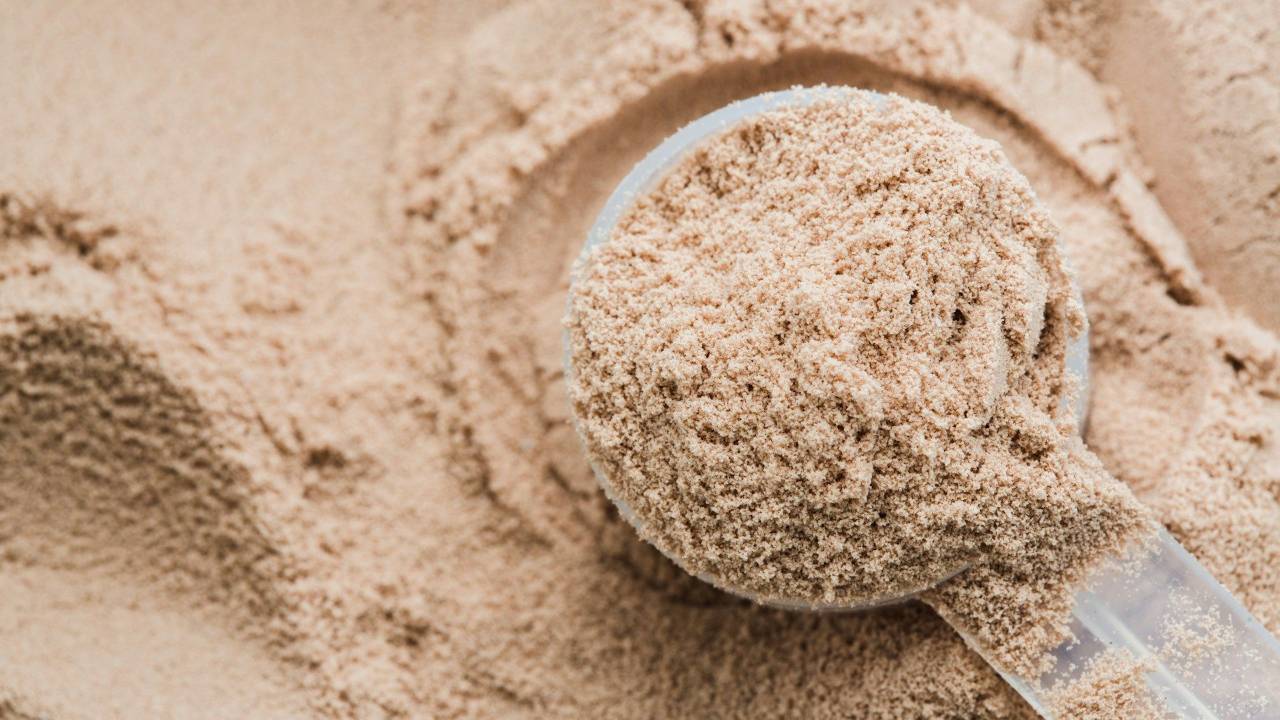
- A cup of plain Greek yogurt with a scoop of protein powder: 40 to 45 grams
- A cup of cottage cheese with fruit: 25 grams and up
- Five ounces of last night's chicken: about 43 grams
- A shake in the car or PROTEIN bar (not granola bar that says "high protein" on it): 20 to 30 grams
That last one counts. I'd rather a kid drink a store-bought protein shake every morning of the school year than eat one beautiful sit-down breakfast twice a week.
Easy protein beats perfect protein. Consistency is what they're short on.
The four things
- Anchor breakfast at 30 grams. Treat it like brushing teeth.
- Repeat that dose at lunch and dinner. Three solid meals beat all-day grazing.
- If they train after school, feed them after practice. The clock matters less than you've been told.
- If sleep is short or they're always sore, add Greek yogurt or cottage cheese before bed.
None of that is expensive. None of it takes a new kitchen or a shelf of supplements.
It takes protein in front of a growing child three or four times a day, which makes this a logistics problem, not a nutrition one.
Your child is building bone, muscle, and the body they'll carry for decades right now, out of whatever you hand them at 7 a.m.
You have far more say in how this school year goes than it feels like you do.
It just doesn't look like influence. It looks like eggs.