This is why your GLP-1 is stealing your muscle
Apr 21, 2026
The scale is cooperating. For the first time in years, the number keeps going down and your clothes fit differently.
So why do you feel softer? Why is the gym harder than it used to be? Why does your body look different in the mirror than you expected after losing that much weight?
You're not imagining it. The answer has everything to do with what GLP-1 drugs actually do, and what they don't.
When the scale wins and your metabolism quietly loses
Tirzepatide and semaglutide are genuinely effective tools. They reduce appetite, calm the food noise, improve insulin sensitivity, and produce weight loss that most people haven't achieved on their own. That part is real.
Unfortunately, nobody explains the body composition piece accurately.
A caloric deficit is a caloric deficit. Your body doesn't distinguish between fat and muscle when it decides what to burn. It goes after whatever is most accessible.
That's the case for all weight loss, not just weight loss from GLP-1s.
Without a strong protein signal and the mechanical stimulus of resistance training, a meaningful portion of the weight you lose isn't fat.
It's muscle.
The body composition data
New 2025 and 2026 research is quantifying this more precisely. The American Academy of Orthopaedic Surgeons published 2026 data showing GLP-1 users face meaningful risks for both lean mass depletion and bone density loss.
Research in Frontiers in Endocrinology found that lean mass accounts for 25-40% of total weight lost in users who aren't following a structured protein and resistance training protocol.
That's not a rounding error. That's a significant metabolic trade-off.
GLP-1 drugs don't have a muscle-sparing mechanism. But they also don't cause muscle loss.
The appetite suppression works. The weight comes off. But the drug can't signal your body to prioritize fat over muscle. That signal has to come from somewhere else, and most users don't know they need to send it.
Why women over 40 carry the most risk
Here's where it compounds.
Starting around age 40, your body loses efficiency at converting dietary protein into muscle tissue.
Researchers call this anabolic resistance. It doesn't mean muscle building stops. It means you need significantly more protein to generate the same muscle protein synthesis response you got at 30.
Then add perimenopause.
Declining estrogen impairs muscle repair. Lower progesterone reduces the anabolic signaling that supports lean mass. Your system is already working against you before you add a medication that cuts your appetite by 30-40%.
Some GLP-1 users lose 5-10 pounds of lean mass for every 20-30 pounds of total weight lost. For a 45-year-old woman who already carries less muscle than she did a decade ago, that's not a cosmetic footnote.
Muscle drives insulin sensitivity, metabolic rate, and functional capacity as you age. Losing it while you lose fat isn't a neutral outcome.
This is why some women feel weaker and more fatigued even as the scale cooperates. The number drops. But so does the tissue you actually need.
The protein math most GLP-1 users miss
Current research supports a target of 0.8-1.0 grams of protein per pound of goal body weight for women in a caloric deficit who are navigating anabolic resistance. For a 150-pound woman, that's roughly 100 grams of protein daily at minimum, and closer to 120 grams to be meaningfully protective.
Here's the problem. GLP-1 drugs suppress appetite significantly. Most users aren't hitting those targets. Not because they're careless, but because they're not hungry.
Leucine matters too. This amino acid triggers muscle protein synthesis, and it shows up in animal proteins, dairy, and quality protein supplements. Low leucine at a meal blunts the anabolic response even when total protein looks fine on paper.
Spreading protein across 3-4 meals rather than concentrating it in one or two also matters. Each protein-containing meal sends a fresh muscle protein synthesis signal. Front- or back-loading cuts the total number of signals your body receives in a day.
If you're on a GLP-1 and not actively tracking protein, you're likely under-fueling your muscle without knowing it.
Resistance training isn't optional. It's the missing signal.
The mechanical stimulus of resistance training sends a signal that protein alone can't replicate. When you load a muscle, you activate the mTOR pathway, the primary cellular switch for muscle protein synthesis. Without that signal, protein doesn't have a destination.
GLP-1 drugs don't activate mTOR. Food intake alone doesn't activate it the same way.
Resistance training does. That's why lifting isn't something you layer on top of the protocol as a bonus. It's a required part of using these medications without trading your metabolism for a lower number on the scale.
Training each muscle group 2-3 times per week with progressive overload protects lean mass far better than a single heavy session each week.
You don't need to be in the gym every day. But you need to show up consistently and add load over time.
A practical protocol for protecting your muscle on a GLP-1
Nobody hands you this at the pharmacy. But this is what the research supports.
- Protein target: Minimum of 0.8 grams per pound goal body weight daily, from whole food sources with a quality supplement to fill the gap
- Leucine-rich foods at every meal: eggs, chicken, Greek yogurt, cottage cheese, whey protein
- Resistance training: 3-4 sessions per week, compound movements, progressive overload
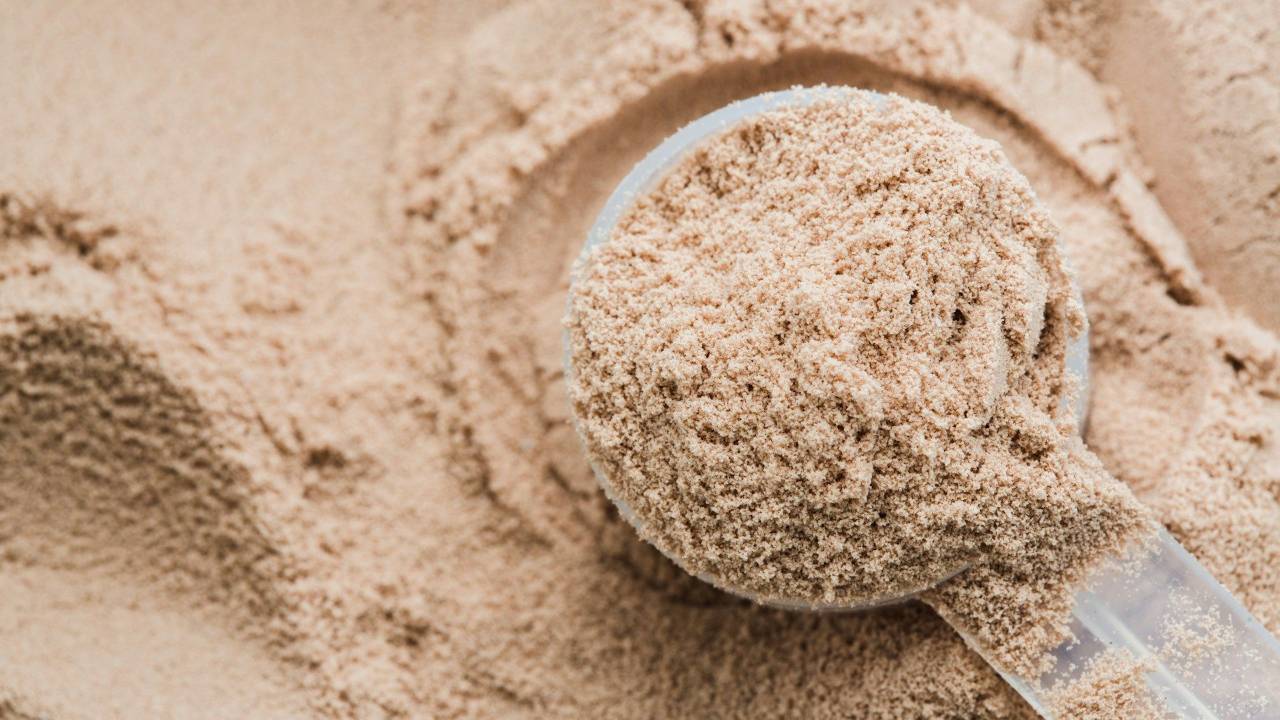
- Creatine: 3-5g daily. It's one of the most well-researched supplements for preserving lean mass during caloric restriction, and most GLP-1 users never hear about it.
- Protein timing: spread across 3-4 meals, not front- or back-loaded
This protocol turns a GLP-1 into a tool instead of a trade-off.
And if you follow this, you'll maintain most if not all your muscle mass while dropping body fat.
Using the window wisely
Tirzepatide and semaglutide reduce how much you eat. They create space: less food noise, a caloric environment your body hasn't experienced in years. But they don't improve the quality of what goes in, and they don't build the metabolic foundation that makes long-term weight management sustainable.
GLP-1 drugs open the window. You decide what to build while it's open.
From my experience, women most often drop the ball when it comes to resistance training. If you're not following a consistent program, try my Resilient program free for 7 days and see if that gets you going in the right direction.
If the protein piece is the hardest part to execute, the High-Protein Meal Plan Bundle gives you a practical roadmap for hitting your targets without obsessing over every gram.
For creatine, leucine-rich protein, and other foundational supplements, Fullscript carries professional-grade options at a discount.
And if you want a personalized protocol, especially if you're navigating perimenopause, thyroid dysfunction, or other hormonal variables alongside your GLP-1, a one-on-one consultation is the fastest path to a plan that actually fits your situation.
The scale going down is a good sign. Make sure what you're keeping is worth keeping.