The More You "Work On Your Health" the Worse You Feel
Mar 27, 2026You've done the work most people won't.
You cleaned up your diet, cut the alcohol, dropped the gluten, started reading labels like it's a part-time job.
You got intentional about sleep before it became a crisis. You figured out stress management before the wheels fell off. You've built habits that put you ahead of 95% of the population.
And still. Something is off.
Maybe it's skin flares with no clear trigger. Headaches after meals you've eaten a hundred times before. A puffy, congested feeling that has nothing to do with the pollen count.
Your heart pounds after dinner for no reason you can identify. Brain fog rolls in mid-afternoon like clockwork. Or there's just a low-grade, body-wide wrongness that shifts, moves around, and never fully resolves, no matter how much you adjust.
You've had labs done. Most of it came back normal. Your doctor didn't have much to offer. So you keep tweaking, more elimination, more supplements, more discipline, without a clear answer.
If that lands somewhere uncomfortable, keep reading. Because histamine is likely part of your picture. Not the answer to everything, but one of the most chronically overlooked pieces in women who are health-aware, already doing a lot right, and still not feeling the way they should.
Histamine Isn't the Enemy, Your Off Switch Is
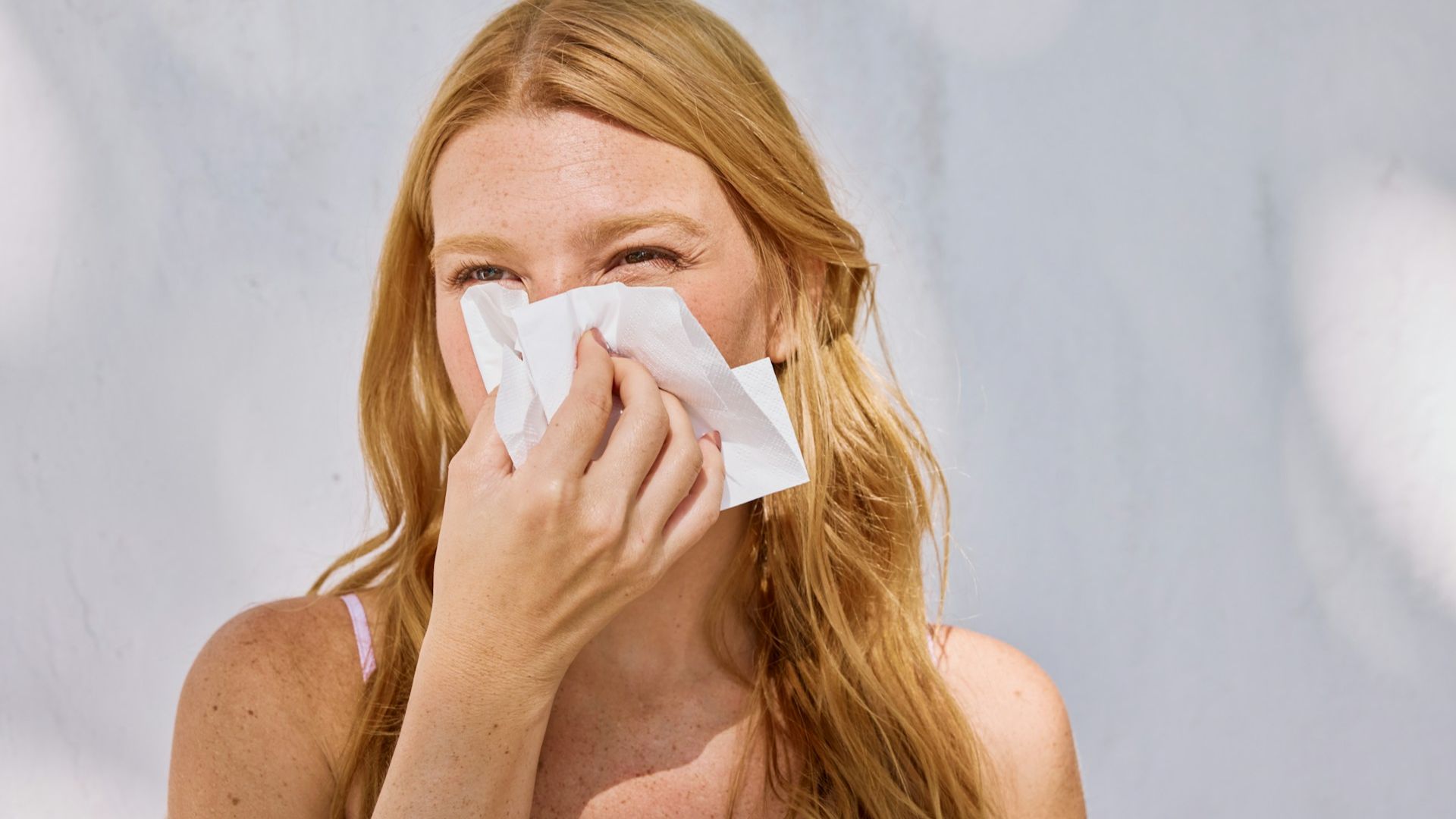
Most people hear "histamine" and immediately think allergies. Benadryl. Springtime pollen. That's histamine, but it's a tiny slice of what histamine actually does in your body.
Histamine is a signaling molecule your body makes constantly, and uses for a wide range of functions:
- immune response
- stomach acid production
- wakefulness
- wound healing
- neurotransmitter activity.
You need it. It's not the problem.
Here's the thing: the problem isn't histamine. It's what happens when your body can't clear it fast enough.
Think of histamine like a smoke alarm.
A functional one fires when it detects smoke, does its job, and resets once the situation is resolved. A broken one goes off at low volume, all day long, not because there's more smoke, but because the off switch stopped working. Eventually, everything seems to set it off.
Your body's primary reset mechanisms are two enzymes.
DAO (diamine oxidase) works in your gut, clearing histamine from food before it enters circulation.
HNMT (histamine N-methyltransferase) handles clearance at the cellular level, inside tissues, including the brain.
When either enzyme is impaired, histamine accumulates. And when it accumulates, it activates receptors throughout the body, in your gut, skin, airways, cardiovascular system, and nervous system. The symptoms look different in different people, which is exactly why this keeps getting missed.
This isn't about one food or one reaction. It's a total load problem. And the clearance system isn't keeping up.
Why Your Labs Look Fine
Here's part of why this is so confusing: there's no standard blood panel for histamine intolerance.
You can check serum histamine or DAO enzyme activity through specialty labs, but these aren't routine. What shows up instead is a constellation of symptoms with no obvious connecting thread, and the usual conclusion is anxiety, hormones, stress, or just getting older. All of which may be contributing. None of which fully explains what's going on.
The absence of a diagnosis doesn't mean there's nothing to address. It means the right questions haven't been asked yet.
Why the Triggers Don't Follow Consistent Rules
This is the part that makes histamine intolerance so maddening: the triggers aren't consistent either.
Yes, certain foods are higher in histamine... aged cheeses, cured meats, wine, fermented foods, shellfish, leftovers that sat in the fridge an extra day. Avoiding those helps.
But it doesn't solve it for most women, because the total histamine burden in your body at any moment is influenced by a lot more than what you ate for lunch.
Estrogen is a major driver. Estrogen directly stimulates mast cells, the cells responsible for releasing histamine, and it also suppresses DAO activity, the very enzyme you need to clear it. This is why symptoms often worsen around ovulation and the week before your period.
It's also a significant reason perimenopause can bring a new wave of histamine-related symptoms in women who never dealt with them before.
Gut health is central to clearance. DAO is produced in the lining of the small intestine. Gut inflammation, dysbiosis, and intestinal permeability all reduce DAO production. This is why histamine issues so frequently show up alongside gut problems.
They aren't separate issues. They're connected. You can't fully address one while ignoring the other.
Your stress response is directly involved. Stress activates mast cells. A hard week at work, a few nights of poor sleep, a stretch of emotional overload, all of it lowers your histamine threshold.
This explains why a food you tolerated fine three months ago now bothers you. The food didn't change. Your capacity to handle it went down.
MTHFR adds another layer. HNMT, the enzyme that clears histamine at the cellular level, depends on methylation to function. If you have a variant in the MTHFR gene (which affects somewhere between 40 and 60% of the population, depending on the variant), your methylation capacity may already be reduced. That means slower histamine clearance, completely independent of what you're eating.
Put all of this together and a simple elimination diet starts to look like treating a four-alarm fire with a paper cup of water. Multiple systems are affecting each other. When one gets stressed, the whole load shifts.
What Actually Changes Things
The goal isn't to eliminate histamine from your life. That's not possible, and it misses the point.
The goal is to rebuild your body's capacity to process histamine while temporarily reducing the load as you do.
Start with the gut. DAO is produced in the intestinal lining. If that lining is compromised from inflammation, dysbiosis, or permeability issues, you're working against yourself no matter what else you do. Nutrients that directly support DAO enzyme activity include B6, vitamin C, copper, and zinc.
DAO enzyme supplements can serve as a practical bridge during the recovery period, especially around meals, while the gut is actively healing.
The form of your B vitamins matters. If MTHFR variants are part of your picture, you need high-quality multivitamins with methylfolate and methylcobalamin, not folic acid and cyanocobalamin. To see the multivitamins I recommend, login to my Fullscript account and then check the "Multvitamin" category under my favorites.
And if MTHFR is still unfamiliar territory, my Practical Guide to MTHFR is a good place to start.
Look at the hormonal layer. If symptoms track with your cycle, estrogen clearance is part of this equation. Supporting liver detoxification and ensuring adequate progesterone, which has a stabilizing effect on mast cells, matters here.
The histamine conversation and the hormone conversation are often the same conversation. Treating them as separate problems rarely works.
Reduce the load strategically. A low-histamine approach doesn't have to be a permanent lifestyle sentence. It's a useful tool during the recovery window, a way to make room, not a forever-elimination. The distinction matters for your sanity and your social life.
Take the nervous system piece seriously. Not as a feel-good recommendation, but as a functional strategy. Chronic stress response keeps mast cells primed. Sleep quality, nervous system regulation, and reducing inflammatory load all affect how much histamine you're producing and how efficiently you're clearing it.
If This Resonates
If you've been dealing with unexplained, shifting symptoms, especially symptoms that worsen predictably around your cycle (ladies), don't respond cleanly to elimination diets, and have mostly resulted in "your labs look fine," histamine is worth a serious look.
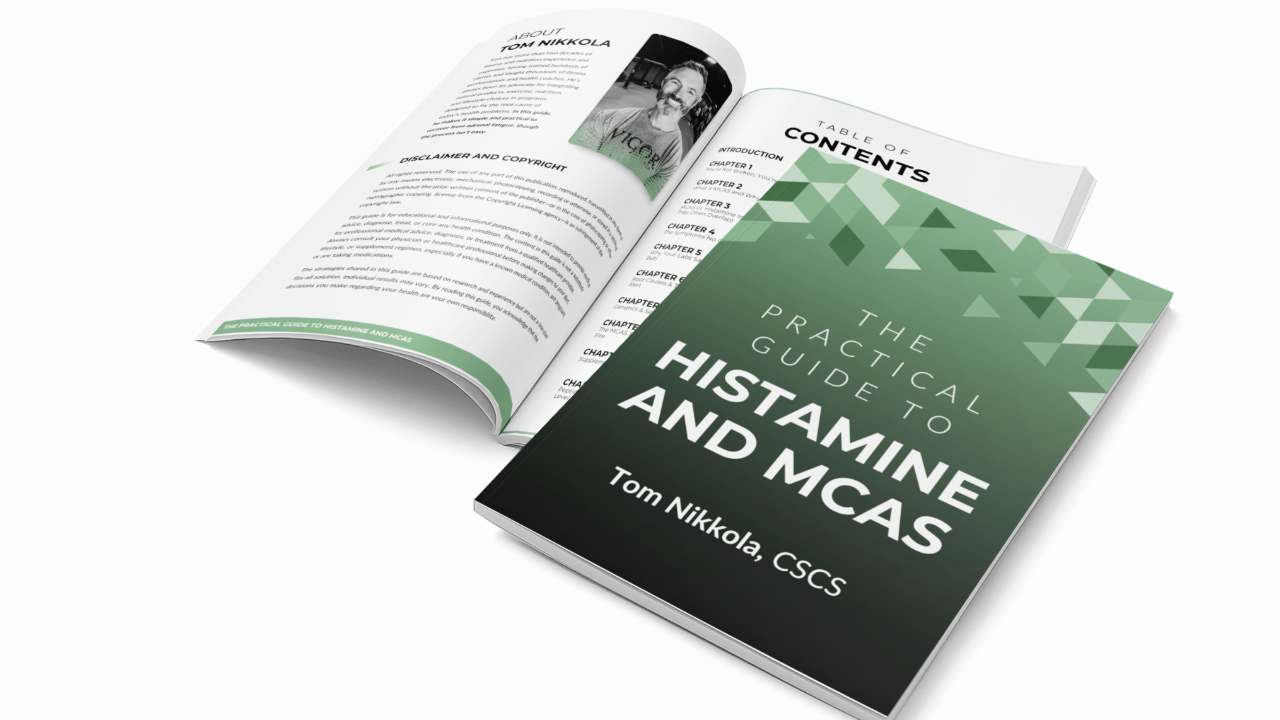
I put together The Practical Guide to Histamine and MCAS to give you a clear, mechanistic understanding of what's actually happening, and a practical framework for working through it.
Not a food list to copy. Not a supplement stack. A way to understand your body's histamine response and a complete plan to help you deal with it.
If you've already gone deep on this and you're still hitting walls, that's what consultations are for. Sometimes it takes a one-on-one conversation to untangle the layered picture: where the gut stands, where methylation is, what the hormonal pattern looks like, and what sequence of intervention actually makes sense for you specifically.
Either way, I hope this gives you something useful to work with.