GLOW vs KLOW for women
May 07, 2026If you've been on Instagram in the last seven days, you've seen them.
Tiny vials, copper-tinted serums, women in their 40s talking about "skin that finally listens."
Time Magazine made it official this week with a feature on the surge of "anti-aging peptide shots" trending across social. The longevity-focused side of the internet has converged on two specific stacks: GLOW and KLOW.
Most of the conversation, though, is missing the part that actually matters for women. Which one fits your physiology, and which one might amplify the exact problem you're trying to fix.
I want to walk through it the way I'd explain it to a client sitting in front of me. No hype, just mechanisms, then a clear path.
What's actually in GLOW
GLOW is a three-peptide blend: GHK-Cu, BPC-157, and TB-500. I've written about these peptides, and where to get them, multiple times, but often in separate articles.
GHK-Cu is a copper-binding peptide that signals fibroblasts to ramp up collagen and elastin production. That's the part most women feel within a few weeks. Skin tone evens out, fine lines soften, and hair density tends to improve.
BPC-157 is the gut and tissue repair peptide. It supports angiogenesis (the formation of new blood vessels), tightens up gut lining, and speeds recovery from soft-tissue strain.
If you've ever wondered why your face is the last thing to heal when your gut is irritated, BPC-157 is part of why fixing the inside changes the outside.
TB-500 (thymosin beta-4) is the migration peptide. It moves repair cells to damaged areas faster, which is why it shows up so often in injury and post-surgical protocols.
Stacked together, GLOW is a structural rebuild. Collagen, vasculature, and tissue repair, all running at the same time.
What KLOW adds
KLOW is the same three peptides plus KPV.
KPV is a tripeptide fragment of alpha-MSH that binds melanocortin receptors.
Translation: it calms mast cells, dials down the inflammatory cascade in skin and gut, and reduces the kind of low-grade irritation that drives redness, flares, and that "my skin reacts to everything" pattern.
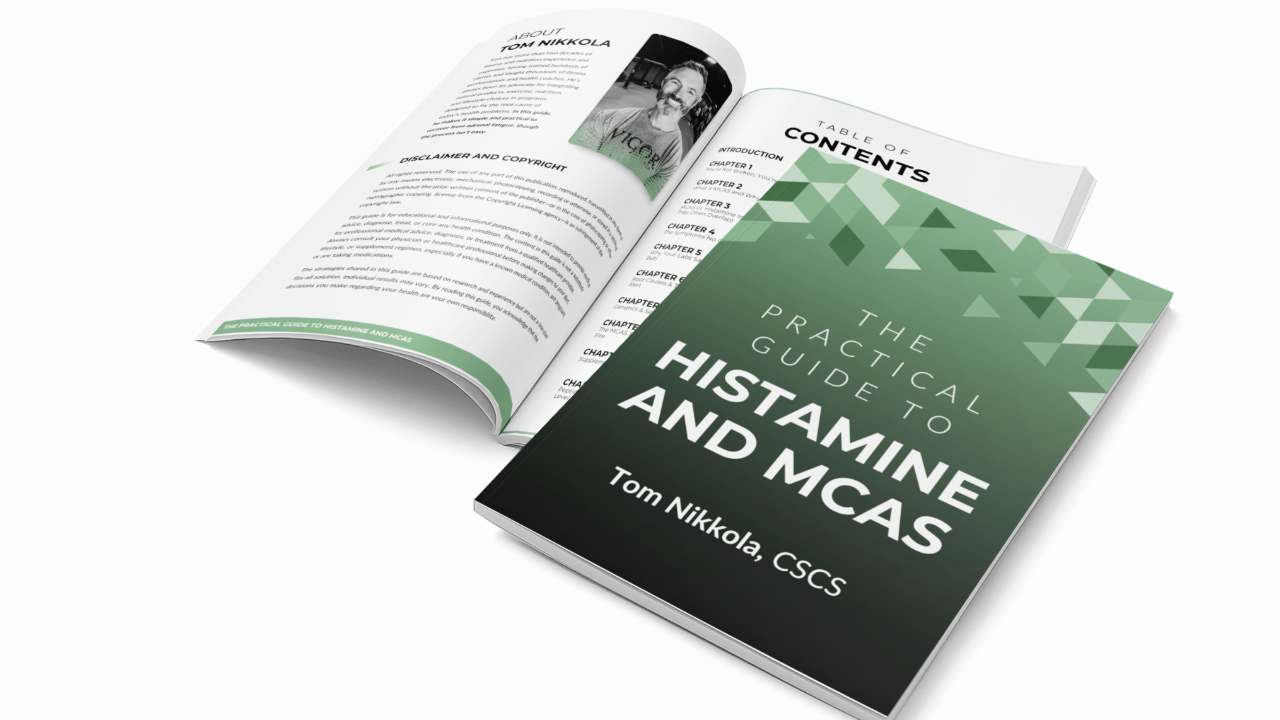
If you've spent any time in my Histamine and MCAS guide, you already know mast cells are the spark plug behind reactive skin, hives, rosacea, eczema, and the random cheek-flushing that hits after a glass of wine.
KPV is the difference between repairing skin and repairing reactive skin.
Which one is actually for you
This is where the social media conversation falls apart, because the algorithm doesn't know your physiology.
Here's the clearest way to think about it.
If your skin concerns are mostly structural (loss of bounce, fine lines, slower wound healing, thinning hair), GLOW is the right starting place. The fourth peptide in KLOW isn't wasted on you, but you don't need the inflammation modulation right out of the gate.
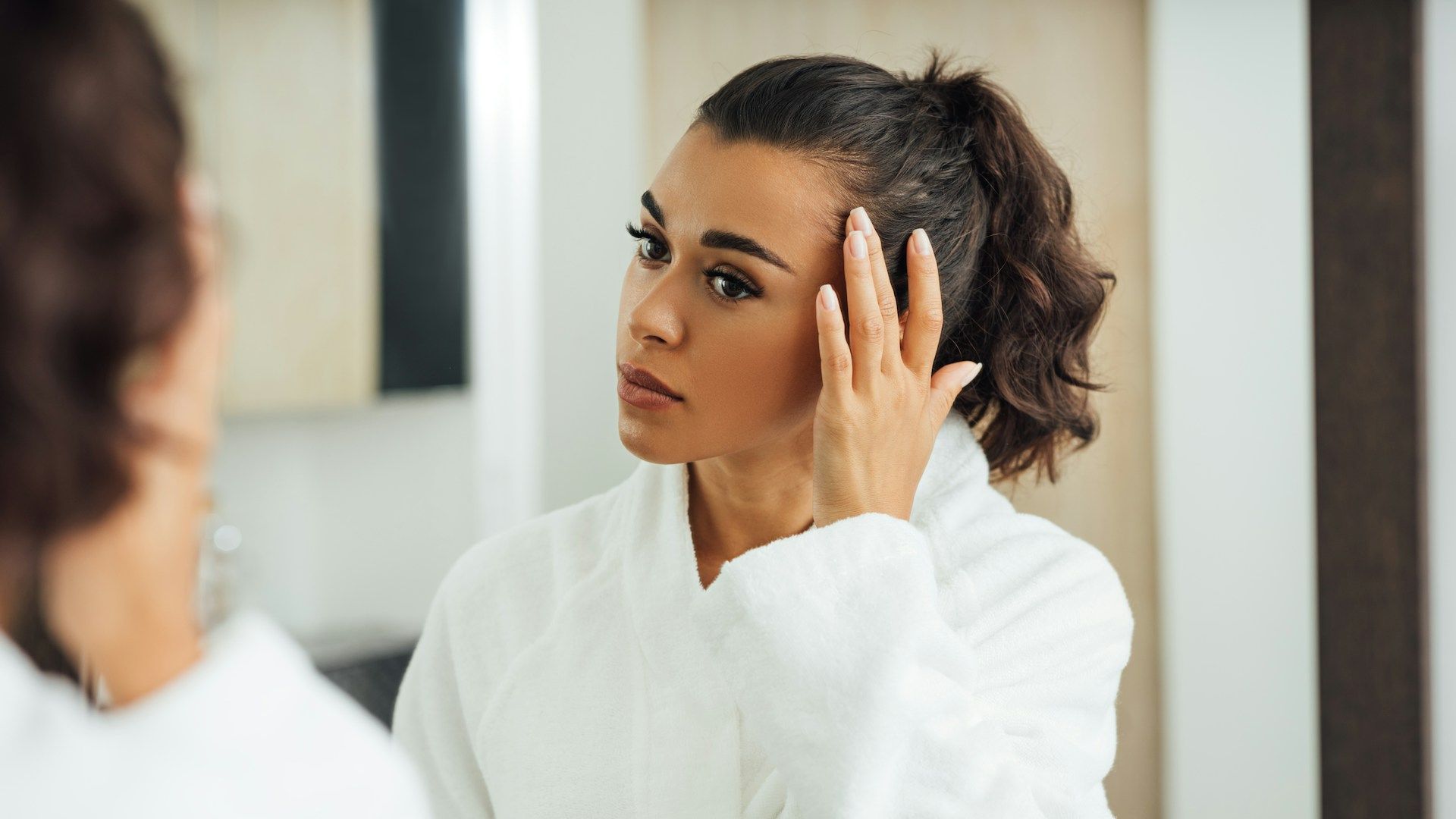
If your skin is reactive (rosacea, eczema, flushing, post-meal redness, MCAS, histamine intolerance, or you generally feel like every product breaks you out), you should not reach for GLOW first.
You want KLOW.
The reason is mechanical. GHK-Cu, BPC-157, and TB-500 all increase cellular activity. For someone whose mast cells are already on a hair trigger, ramping up that activity without modulating the inflammatory response can amplify what you were trying to fix.
KPV does that modulation. It's the brake pedal that lets the rest of the stack do its work without flaring you.
Why these stacks are popular right now
A few converging reasons.
Women in their 40s and 50s are the fastest-growing demographic in functional medicine. They're done with creams that promise results in eight weeks and deliver none. They've already tried collagen powders, red light, microneedling, and a stack of supplements that came with their genetic test.
The GHK-Cu mechanism is also genuinely well-studied. The copper signaling work goes back decades, with strong evidence on collagen synthesis, hair follicle stimulation, and wound healing. What's new is the delivery. Injectable peptides hit the bloodstream in a way topical copper never has.
And the gut-skin axis is finally mainstream. Most women who struggle with skin issues also have some level of gut dysfunction, low DAO activity, or a thyroid that's running cold. Peptides like BPC-157 and KPV work on both ends at once. That's the appeal.
What the Time feature actually said
Time's coverage centered on the social-media-driven explosion of "peptide shots" among longevity-focused women. They flagged the regulatory gray zone, the price points, and the fact that the conversation has outpaced the medical infrastructure around it.
That last part matters. Most women are sourcing peptides from places I would not recommend.
Reddit threads, unregulated overseas vendors, and Instagram DMs aren't quality control. The peptides themselves are well-supported. The supply chain most people use isn't.
This is where I push back on the trend. Peptides without a real prescriber are how good ideas turn into bad outcomes.
How I'd suggest starting
If you're thinking about starting either stack, here's the order I'd give a client.
First, fix the foundation. That means protein at every meal (around 1 g per pound of goal body weight is the floor), sleep that actually clears cortisol, and a real read on your iron and thyroid status. Peptides amplify what's already there. They don't replace what's missing.
Second, match the stack to your skin pattern. Structural slowdown gets GLOW (which is simply BPC-157/TB-500 + GHK-Cu). Reactive, flaring, histamine-driven skin gets KLOW (now available as an all in one solution). Don't pick based on the prettier reel.
Third, source from a real telehealth platform. For those in the U.S., this is readily accessible, with physician oversight, and U.S.-compounded product. For my international readers (and half my clients who are international), it's a little more challenging, and access really varies by country.
If you want to take a closer look at the KLOW stack I'd point most reactive-skin clients toward, it's available now.
One more thing about peptides and women
Women's physiology isn't a smaller version of male physiology. Hormone fluctuation, mast cell density, and methylation all interact with peptide therapy in ways the broader peptide community is just starting to take seriously.
If you're MTHFR variant-positive, COMT-slow, or running on adrenal fumes, the peptides in GLOW and KLOW will still work. They work much better when methylation, cortisol, and histamine clearance pathways are already in order.
My MTHFR guide and the COMT guide cover the genetics piece. The Adrenal Fatigue guide covers the cortisol piece.
That's how the stack actually compounds. Everything works together, or nothing really works.
The takeaway
GLOW is structural. KLOW is structural plus calm. The skin you have right now decides which one belongs in your protocol.
The trend is real, the science is solid, and the timing is good. Just don't buy peptides from a stranger on the internet, and don't pick the stack based on a 20-second reel. Use only peptides prescribed by an actual physician. And to be clear, that's not me. It's the telehealth company I personally use and recommend to my U.S. clients.