Skin, Collagen, and the Hormone You Stopped Making Enough Of
Jun 13, 2026You notice it in small ways first.
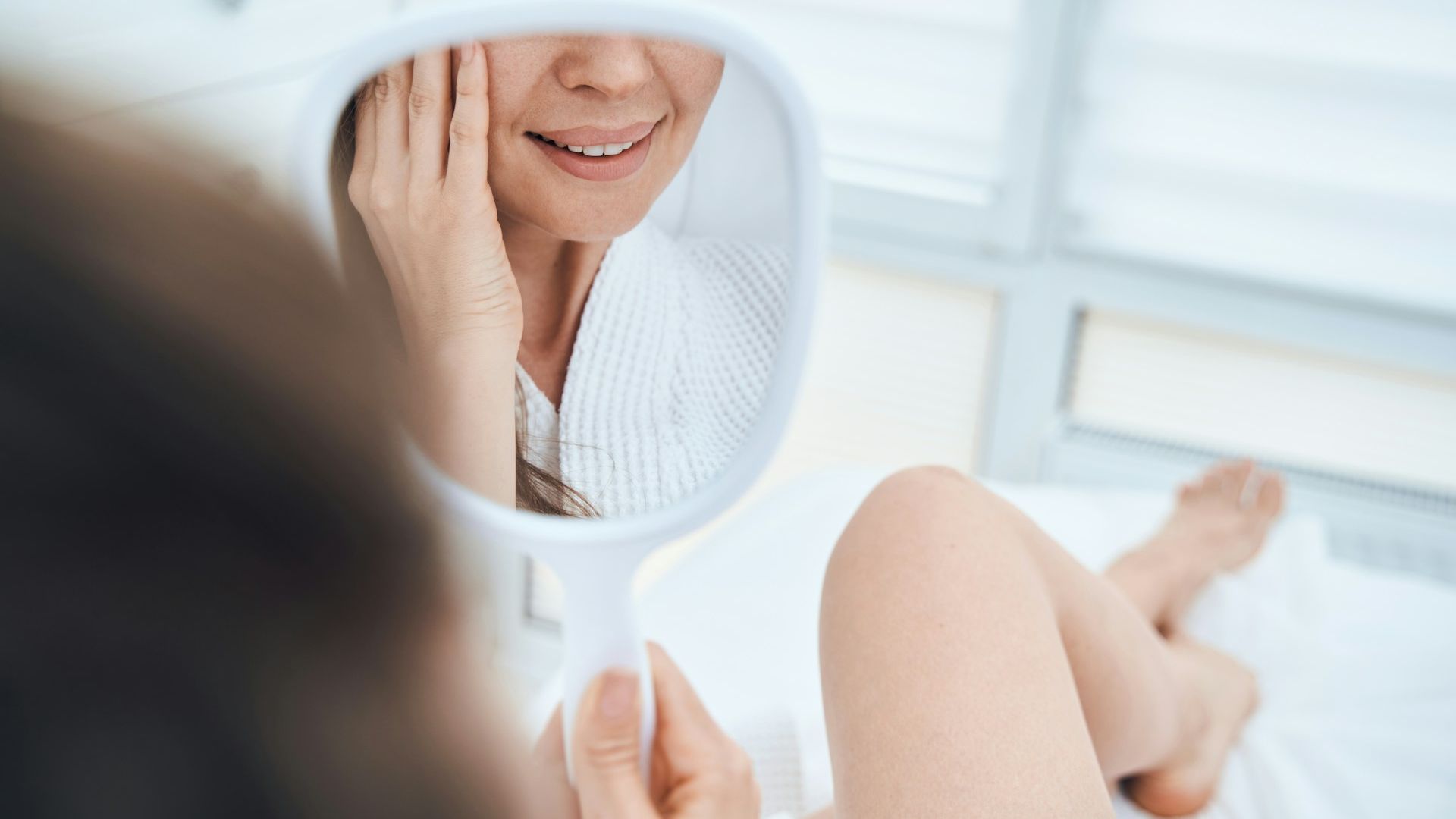
The skin on the back of your hands looks a little crepey under bright light. A paper cut that used to vanish in two days now lingers for a week. The fine lines you could once smooth with sleep and water seem to have settled in for good.
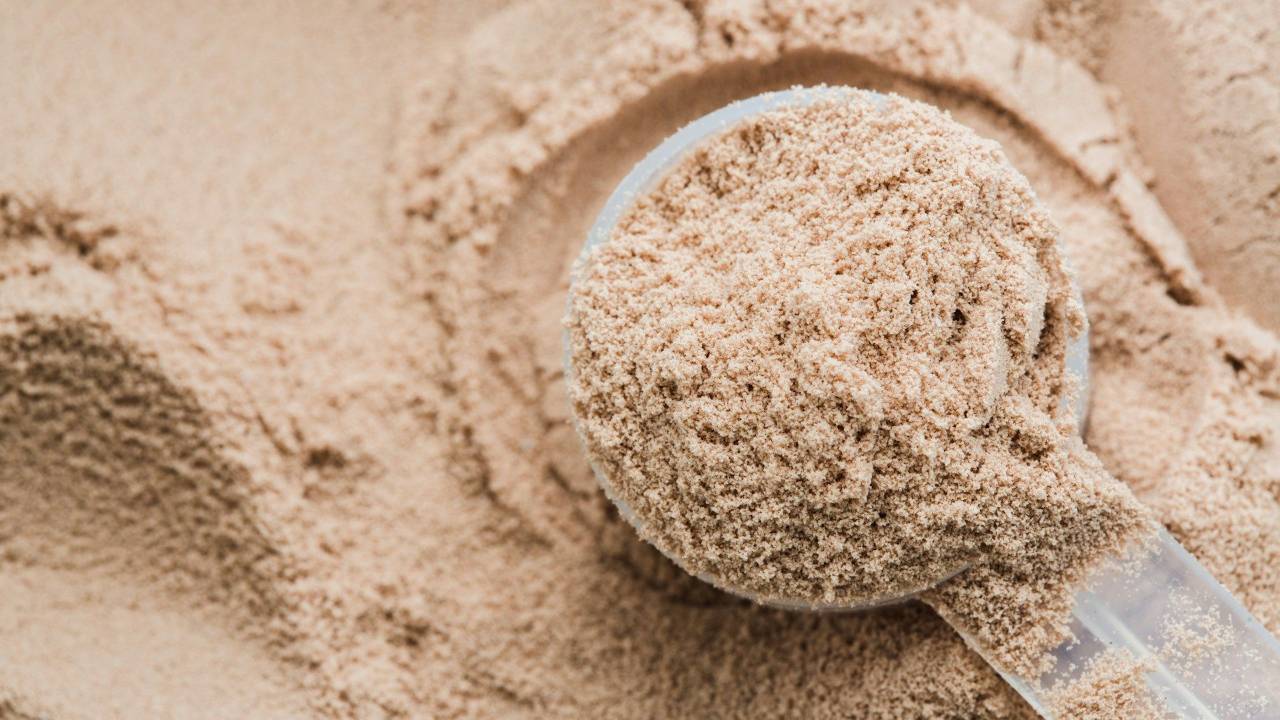
So you do the reasonable things. You buy the better serum, the one with the actual research behind it. You add a collagen powder to your morning coffee. Maybe you book the facial. And some of it helps, a little, on the surface.
But the change you're feeling isn't really happening at the surface. It's happening one layer down, in the part of your skin that no cream can reach. And the reason has less to do with your skin than with a hormone that started getting quieter sometime in your thirties.
Your skin is built on collagen, and collagen is built on a signal
Roughly 70 to 80 percent of the dry weight of your dermis, the living layer beneath the surface, is collagen. It's the scaffolding that keeps skin firm, plump, and quick to repair itself.
That scaffolding is not permanent. Specialized cells called fibroblasts are constantly tearing down old collagen and laying down new. When the rate of building keeps pace with the rate of breakdown, skin stays resilient. When building slows, the scaffolding thins, and the surface starts to show it.
Here's the part most people never hear. Fibroblasts don't build collagen on their own initiative. They respond to instructions. Two of the most important come from growth hormone (GH) and the molecule it triggers in your liver, insulin-like growth factor 1 (IGF-1). GH and IGF-1 signal fibroblasts to proliferate and to synthesize new collagen, the type I and type III collagen that gives young skin its structure.
So when people talk about "losing collagen with age," they're describing a symptom. The deeper event is that the signal telling your skin to build collagen has gone quiet.
What happens to that signal after 30
Growth hormone is not a hormone you outgrow. You need it your whole life. But the amount your body releases follows a steep downward slope.
After about age 30, GH output declines roughly 14 percent per decade. By your late forties, you may be producing a fraction of what you did at 25. Researchers call this gradual decline somatopause, and it tracks closely with many of the changes we file under "just getting older," including thinner skin, slower healing, less lean muscle, and deeper, less restful sleep.
For women, perimenopause and menopause can sharpen the slope. Estrogen interacts with the GH and IGF-1 axis, and as estrogen falls, the collagen-building environment in the skin gets less supportive at the same time GH is already fading. This is part of why skin can seem to change so quickly in the years around menopause. Studies have estimated that women can lose a meaningful share of skin collagen in the first years after menopause alone.
None of this means the machinery is gone. Your fibroblasts can still build. Your pituitary can still release GH. The instruction has simply grown faint.
Where Sermorelin fits
This is where the conversation usually jumps straight to "growth hormone injections," and where it's worth slowing down, because Sermorelin is a different idea entirely.
Synthetic HGH replaces your growth hormone from the outside. It overrides your body's own production and feedback. Sermorelin does close to the opposite. It's a growth hormone releasing hormone (GHRH) analog, which means it speaks to your pituitary in the pituitary's own language and prompts it to release more of your own growth hormone.
That distinction matters for two reasons.
First, your body keeps its natural rhythm. GH isn't meant to sit at a flat, constant level. It's released in pulses, mostly at night during deep sleep. Because Sermorelin works upstream, on the release signal, it tends to preserve that pulsatile pattern rather than flatten it.
Second, your own safety brake stays connected. Your body has a hormone called somatostatin that tells the pituitary when to stop. Sermorelin works within that feedback loop, so the system can still regulate itself. That's the core reason this approach is generally viewed as gentler than replacing the hormone wholesale.
For your skin, the logic is direct. More of your own GH means more IGF-1, and more GH and IGF-1 means a stronger instruction to the fibroblasts that build and repair collagen. You're not painting the surface. You're turning the volume back up on the signal underneath it.
The other things that tend to come back with the signal
Skin is the reason most people get curious, but it's rarely the only thing they notice, because GH touches far more than the dermis.
The same signal that supports collagen also shapes:
- Sleep depth. GH and slow-wave sleep are tightly linked, each one feeding the other. Many people describe deeper, more restorative sleep as one of the first changes they feel.
- Body composition. GH supports lean muscle and influences how the body handles fat, which is why it sits so close to the longevity conversation.
- Recovery. The tissue repair that slows with age, including how quickly you bounce back from training or injury, leans on the same GH and IGF-1 pathway.
You don't have to chase all of that to care about your skin. But it helps to know that the thing showing up in the mirror is connected to the thing showing up in your sleep, your recovery, and your strength. It's one system, not five separate problems.
Topicals work on the surface. This works from the inside.
There's nothing wrong with a good serum. Vitamin C, retinoids, and the rest have real uses, and the daily fundamentals below genuinely matter.
But a cream can only act on the outermost layer. It can't tell a fibroblast three layers down to build more collagen, because that instruction doesn't come from the outside. It comes from a hormone, and that hormone has been getting quieter for years.
If you've already done the topical work and the collagen powder and the careful routine, and your skin still feels like it's thinning faster than it should, that's usually the clue that the limiting factor isn't on the surface. It's the signal. And the signal is the one thing those products were never built to reach.
What to do this week
Before considering anything more, build the foundation. These four things create the raw materials and the conditions GH needs to do its job, and they help no matter what you decide next.
- Eat enough protein, every day. Collagen is built from amino acids, especially glycine, proline, and lysine. Aim for roughly 0.8 to 1 gram of protein per pound of goal body weight, spread across three meals four to six hours apart. Without the raw material, no signal can build much.
- Get vitamin C from food and, if needed, a supplement. Vitamin C is a required cofactor for the enzymes that actually assemble collagen. Without it, fibroblasts can't finish the job. Bell peppers, citrus, and berries daily, with 500 mg of supplemental vitamin C if your diet falls short.
- Protect deep sleep. Most of your GH releases in the first few hours of slow-wave sleep. A consistent bedtime, a cool dark room, and no alcohol close to bed protect the single biggest natural pulse of GH you get each day.
- Do resistance training, two to four times a week. Lifting is one of the most reliable natural triggers for GH release, and it signals muscle and skin tissue to rebuild. This is the longevity foundation underneath everything else. If you don't have a great program to follow, tap here for a 7-day trial of my workout program, Resilient.
Give these a real four to six weeks. For some people, the fundamentals are enough to notice a difference. For others, the signal itself has faded too far for food and sleep alone to restore, and that's worth taking seriously rather than accepting as inevitable.
If the foundation isn't enough, this is the next step I'd point you to
When a client has the fundamentals dialed in and still feels their skin, recovery, and sleep slipping faster than their effort can account for, this is usually where the conversation turns to Sermorelin.
When that's the case, I point people to a telehealth company that my clients and I work with. It's the responsible way to explore Sermorelin, with a licensed provider and real medical oversight rather than a gray-market vial from the internet. You complete an intake, a licensed provider reviews it, and if it isn't a fit for you, they'll tell you. If you've been curious about Sermorelin and waiting for a sound way to look into it, this is the step I'd take.
A note worth adding: many people pair this internal work with GHK-Cu, a copper peptide your body also makes less of with age. GHK-Cu has its own research behind it for supporting collagen, elastin, and skin repair. The same provider can speak to whether it belongs alongside, so your skin is being supported from the signal down to the surface.
→ Tap here to explore whether Sermorelin fits, with a licensed provider
If you'd rather start with a conversation
If you want help deciding where to put your energy first, or you'd like someone to look at the whole picture before you change anything, I work with people one-on-one to map this out.
→ Tap here to book a 1:1 consultation