Most people think they already know my answer when they ask me this.
“If you had to pick one peptide… what’s your favorite?”
And honestly, if you asked my audience or clients, they’d probably answer for me:
GLP-1s.
Not because GLP-1s are objectively the best peptide for everyone, but because they’re the most commonly used. When something changes your appetite, your weight, your blood sugar, your confidence, and your relationship with food, it feels life-changing. And for many people, it is.
I use a GLP-1 myself. Tirzepatide has significantly improved my body composition, mental clarity, energy, and inflammation more than almost anything I’ve tried. It’s been powerful.
But here’s the part that surprises people.
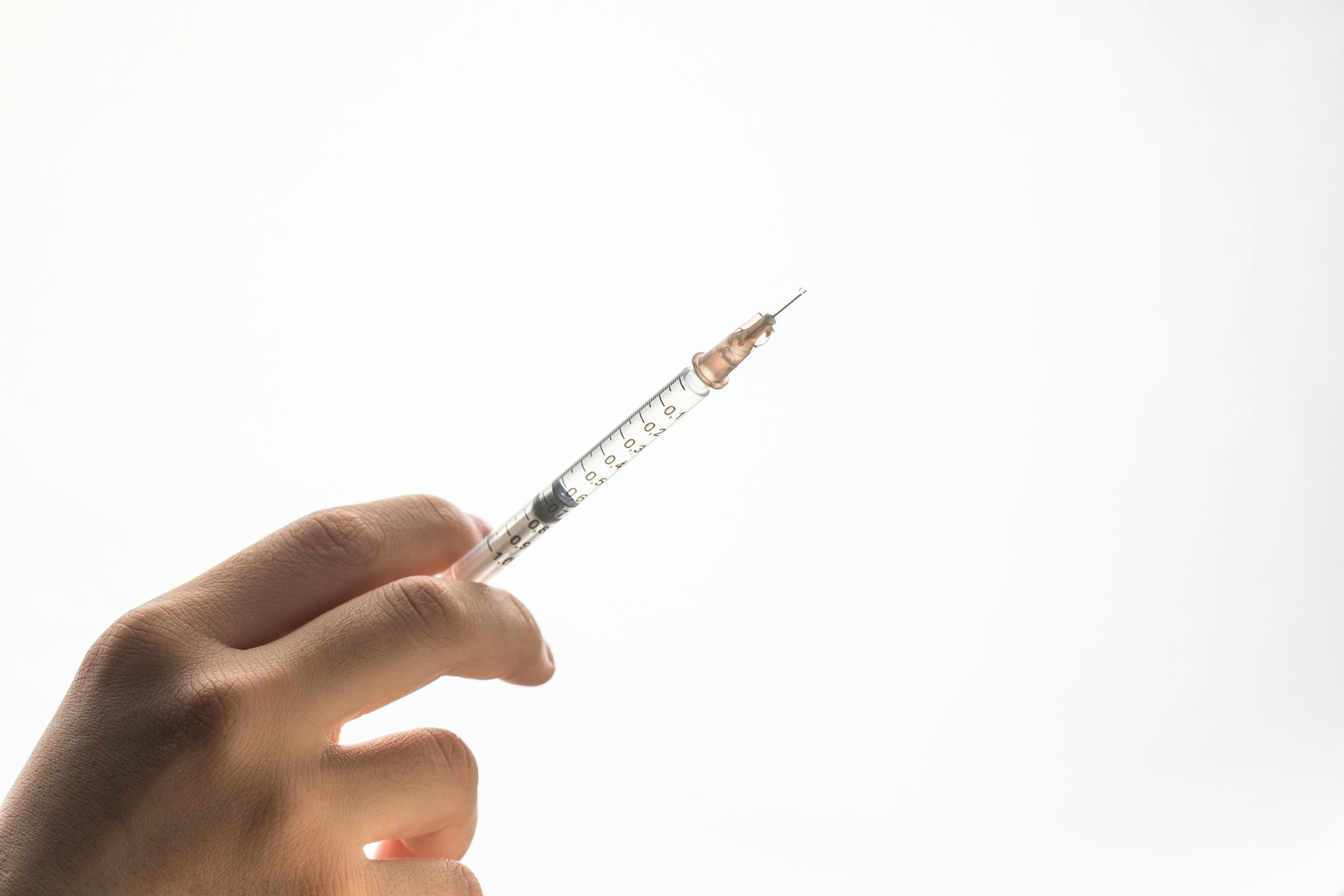
If I had to choose one injectable that has quietly changed my day-to-day life the most… it wouldn’t be a GLP-1.
It would be sermorelin.
Not for the reason you’re probably expecting.
Why this question matters more than it sounds
When people ask about a “favorite peptide,” they’re usually asking something deeper.
They’re asking:
-
What actually moves the needle?
-
What’s worth the cost, the effort, the commitment?
-
What works in real life, not just on paper?
Most answers online are either overly clinical or wildly exaggerated. And almost none explain why one peptide might help one person more than another.
That’s what I want to unpack here.
Not as hype.
Not as a sales pitch.
But as a grounded explanation, based on physiology, experience, and pattern recognition from working with a lot of people.
A quick note on experience (without making this about me)
Three years ago, I broke my neck, sustained a severe spinal cord injury and ended up getting emergency ACDF surgery, fusing my C5-C6 and C6-C7. Mountain bike accident.

I’m largely recovered (story for another time). I train. I live normally. I function well.
But since that injury, one thing never fully resolved: persistent neck stiffness and irritation, especially overnight.
Every morning looked the same for over two years:
-
Wake up stiff
-
Subtle headache
-
Guarded movement getting out of bed
And since I'd sleep in a way to minimize the neck stiffness, other joints and my low back would ache in the morning, too.
Manageable? Yes.
Normal? No.
I accepted it as “a small cost of my accident.”
Until I didn’t have to.
The moment I noticed something was different
When I first started using sermorelin, I expected what most people expect:
-
Better sleep
-
Better recovery
-
Maybe some body composition benefits
All reasonable expectations.
What I didn’t expect was this:
I woke up without neck pain. After the first night!
No stiffness.
No headache.
No cautious movement getting out of bed.
At first, I brushed it off. Thought it was coincidence.
But the pattern became impossible to ignore.
-
Nights I used sermorelin → no neck pain
-
Nights I didn’t → stiffness came back
-
Switching to other growth hormone peptides → pain returned
-
Coming back to sermorelin → gone again
Not reduced.
Not “a little better.”
Gone.
And over time, I noticed something else: My joints overall felt better... even better than they ever did on BPC-157 or TB-500 alone.
That’s when I started asking a different question.
Not “Does sermorelin increase growth hormone?” But…
Why does it seem to reduce inflammation and tissue irritation in a way other peptides don’t for me, and for some people?
What sermorelin actually does (in plain language)
Sermorelin is a growth hormone–releasing hormone (GHRH) analog.
Instead of forcing growth hormone into your system, it tells your brain:
“Hey, this is a good time to make your own.”
That distinction matters more than most people realize.
When growth hormone is released naturally:
-
It follows circadian rhythms
-
It pulses (instead of staying flat)
-
It interacts with sleep architecture
-
It coordinates with tissue repair signals
This creates a very different downstream effect than simply raising numbers on a lab report.
The overlooked benefit: tissue quality, not just muscle
Most people talk about growth hormone in terms of:
-
Fat loss
-
Muscle gain
-
Anti-aging
Those are real, but they’re not the whole story.
Growth hormone plays a massive role in:
-
Collagen remodeling
-
Connective tissue integrity
-
Joint lubrication
-
Disc and ligament health
-
Neural recovery and inflammation signaling
In other words…
It doesn’t just help you build tissue. It helps you maintain and restore tissue quality.
That’s a very different goal.
And for people with:
-
Old injuries
-
Chronic stiffness
-
Joint irritation
-
“I wake up sore every day” symptoms
That distinction can be everything.
Why sermorelin may feel different than other GH peptides
I’ve also used ipamorelin and tesamorelin.
They’re effective. They have value. But they work through slightly different mechanisms.
Here’s the simplified version:
-
GHRH-based peptides (like sermorelin) support the entire GH signaling cascade.
-
Ghrelin mimetics (like ipamorelin) stimulate GH release, but without the same upstream coordination.
For some people, that difference shows up as:
-
Better sleep depth
-
More consistent overnight recovery
-
Less joint and connective tissue irritation
-
Calmer nervous system tone
Not because one is “stronger.”
But because one works with your physiology instead of around it.
This is the part that changes outcomes
If you remember nothing else from this email, remember this:
Most people don’t need more stimulation. They need better signaling.
Sermorelin doesn’t push. It restores rhythm.
And when rhythm improves:
-
Inflammation calms
-
Tissues recover more completely
-
Pain signals soften
-
Sleep becomes more restorative
That’s not sexy marketing.
But it’s how bodies actually heal.
Where GLP-1s still shine (and why this isn’t either/or)
None of this diminishes the value of GLP-1s.
Tirzepatide has been transformational for:
-
Metabolic health
-
Body composition
-
Inflammation reduction
-
Mental clarity around food
-
Long-term adherence to healthier habits
For many people, it’s the right first step.
But GLP-1s don’t directly address:
-
Tissue repair
-
Joint integrity
-
Overnight recovery
-
Injury-related inflammation
That’s where sermorelin fills a gap.
Not as a replacement. As a complement.
Who tends to benefit the most from sermorelin
Based on both physiology and real-world patterns, sermorelin often shines for people who:
-
Wake up stiff despite “doing everything right”
-
Have old injuries that never fully resolved
-
Train consistently but don’t recover like they used to
-
Sleep, but don’t feel restored
-
Feel inflamed without clear lab abnormalities
These are the people who are often told: “Your labs look fine.”
And yet… their body says otherwise.
How I think about using it (conceptually)
This isn’t medical advice, just the framework I use.
I don’t view sermorelin as:
-
A fat loss drug
-
A muscle drug
-
A shortcut
I view it as: a nightly repair signal.
Something that tells the body: “Now is the time to restore.”
That mindset changes everything, from dosing patience to expectations.
I don’t talk about favorites lightly.
But waking up without pain, after years of accepting stiffness as normal, changes how you think about what’s possible.
That’s why sermorelin is my answer.
Not because it’s trendy. Not because it’s flashy.
But because it gave me something back I didn’t realize I’d stopped expecting.
Feeling normal in my body again.
If this resonated, or if you’ve been stuck in that gray zone where nothing is wrong but nothing feels right, give sermorelin a try.
Tap here for access to the sermorelin I use and refer my clients to.




Responses